Vistar Electronics is a professional USB-C connector manufacturer supplying a full range of Type-C receptacles, plugs, and waterproof connectors for global OEM and ODM customers. Our USB-C connector lineup covers USB 2.0 through USB4 Gen 3 (40 Gbps), with pin counts from 6 to 24, mounting styles including SMT, DIP, mid-mount, and right-angle, and waterproof ratings up to IP68. All products are RoHS 3 and REACH compliant with MOQ from 1,000 pcs.
Compatible with USB 2.0, USB 3.1, USB 3.2, USB4, and Power Delivery (PD) applications.
Vistar offers several 24-pin USB-C female receptacle variants, each optimized for a different mounting requirement. Use the table below to find the right one for your design, or contact our engineers if you’re not sure.
| Model | Mounting | Orientation | Protocol / Speed | Rating | Cycles | Best For |
|---|---|---|---|---|---|---|
| USB-TC24-F09 | DIP + SMT Hybrid | Horizontal | USB 3.1 | 5A / 20V | 10,000 | Frequent insertion / vibration; needs extra PCB retention strength beyond SMT alone |
| USB-TC24-F25 | SMT only | Horizontal | USB4 | 5A / 20V | 10,000 | Standard automated SMT lines; next-gen USB4 designs, no special mechanical needs |
| USB-TC24-FW10 | SMT | Vertical | USB 3.1 | 5A / 20V | 10,000 | Outdoor or industrial equipment needing IP68 dust/water sealing |
| USB-TC24-F30 | Single-row SMT | Horizontal (Right-Angle) | USB4 (40 Gbps) | 5A / 20V | 10,000+ | Maximum data speed (40Gbps); single-row saves ~30% PCB footprint; industrial temp range (−40°C to +85°C) |
| USB-TC24-F18 | Vertical SMT | Straight (Vertical) | USB4 (40 Gbps) / PD 3.1 | 5A per contact / 20V DC | 10,000 | Vertical/top-exit port, full dual-row USB4 pinout, PD up to 240W |
| USB-TC24-F28M01 | SMT + through-hole reinforcement | Right-angle (90°) | USB 3.2 Gen 2 | 5A / 20V | 10,000+ | Edge-mounted right-angle ports needing extra mechanical strength |
| USB-TC24-F11 | SMT, Mid-Mount | Horizontal (Mid-mount) | USB 3.2 Gen 2 (10 Gbps) | 3A per VBUS (5A total) / 20V DC | 10,000 | Ultra-thin laptops, tablets, IoT; PD up to 100W; standard mid-mount profile |
| USB-TC24-F24 | SMT, Mid-Mount (Sinking, CL=0.5mm) | Right-angle (Mid-mount) | USB4 Gen 3 (40 Gbps) | 5A / 20V DC | 10,000 | Lowest profile mid-mount (0.5mm centerline) + full USB4 40Gbps + PD 240W — use when F11’s 10Gbps/100W isn’t enough |
* Always re-confirm against the current datasheet before finalizing a design, as pages may be updated. Need help choosing? Contact our engineering team with your mounting height, current, and speed requirements.
| Connector Type | USB Standard | Data Rate | Current Rating | Key Features | Best For |
|---|---|---|---|---|---|
| 24-Pin Full-Featured | USB4 / USB 3.1 Gen 2 | Up to 40 Gbps | 5A / USB PD | DP / HDMI / Thunderbolt Alt Mode | Laptops, docks, industrial equipment |
| 16-Pin Standard | USB 2.0 | 480 Mbps | 5A / USB PD | Cost-effective, high power | Chargers, IoT devices, low-cost applications |
| 6-Pin Waterproof | USB 2.0 | 480 Mbps | 3A | IP67 / IP68 waterproof rating | Outdoor, marine, wearable devices |
| Mid-Mount Right Angle | 24-pin or 9-pin | Depends on pin count | Depends on pin count | Reduced board height, SMT/Wave solder | Ultra-thin devices, space-constrained designs |


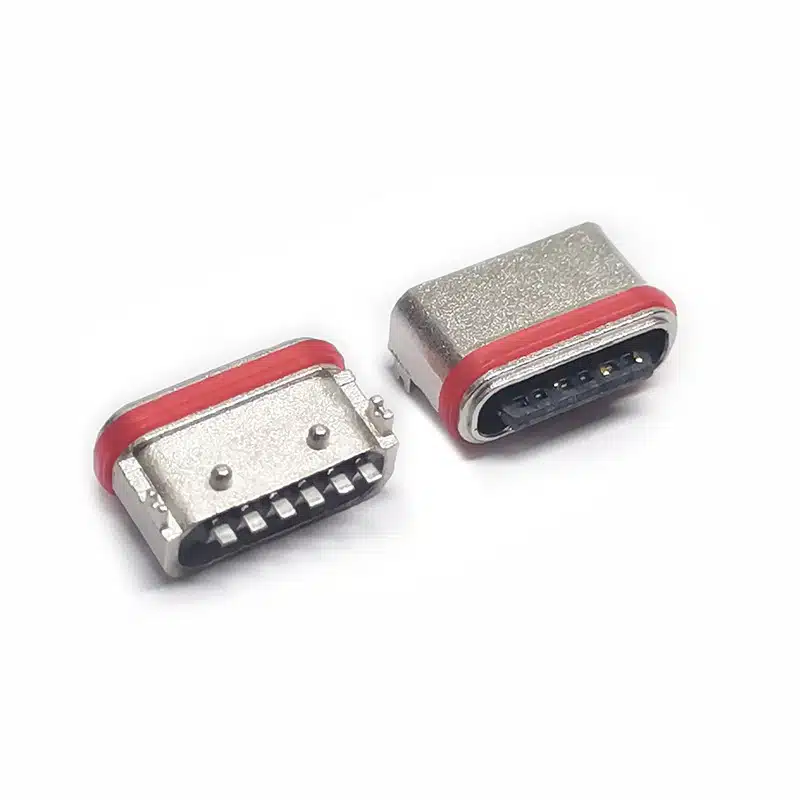
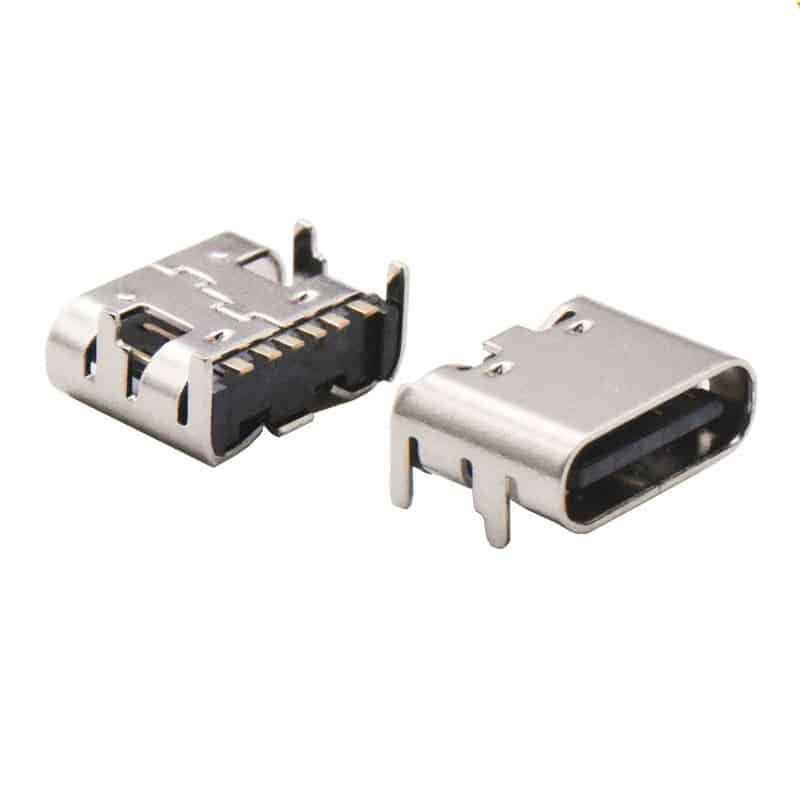


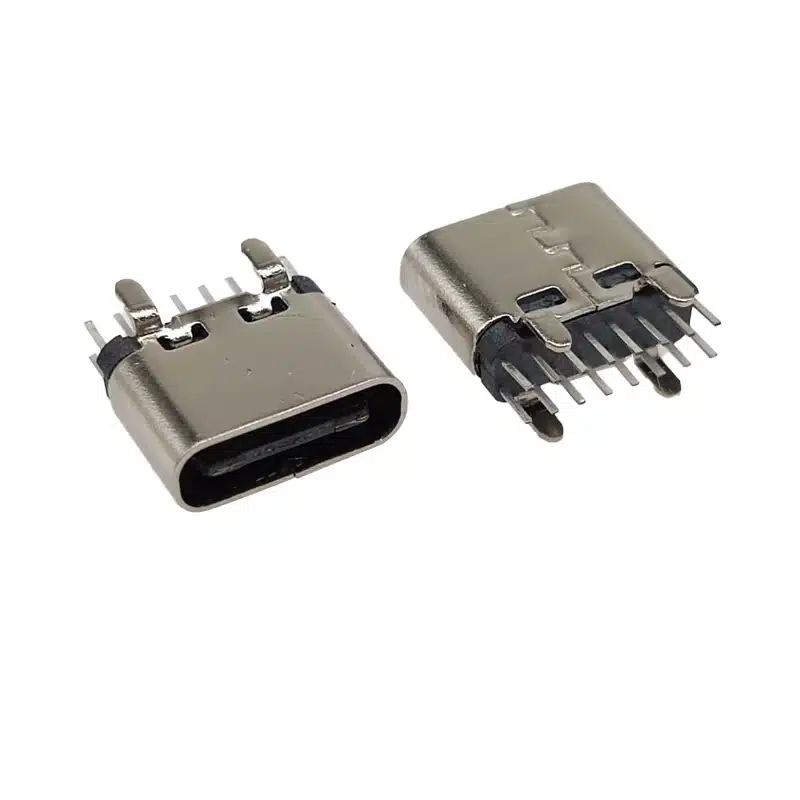


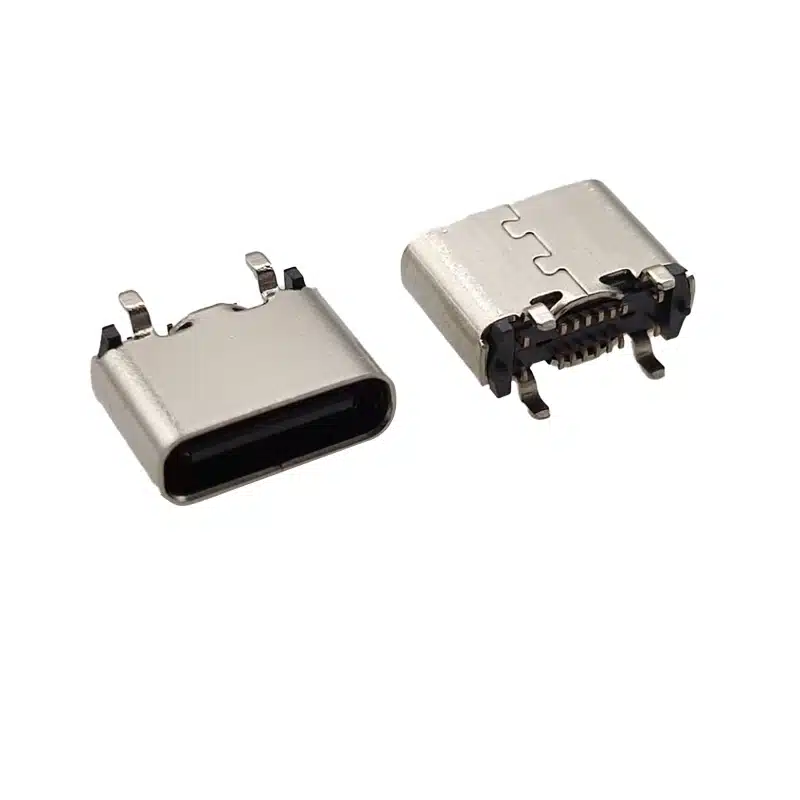
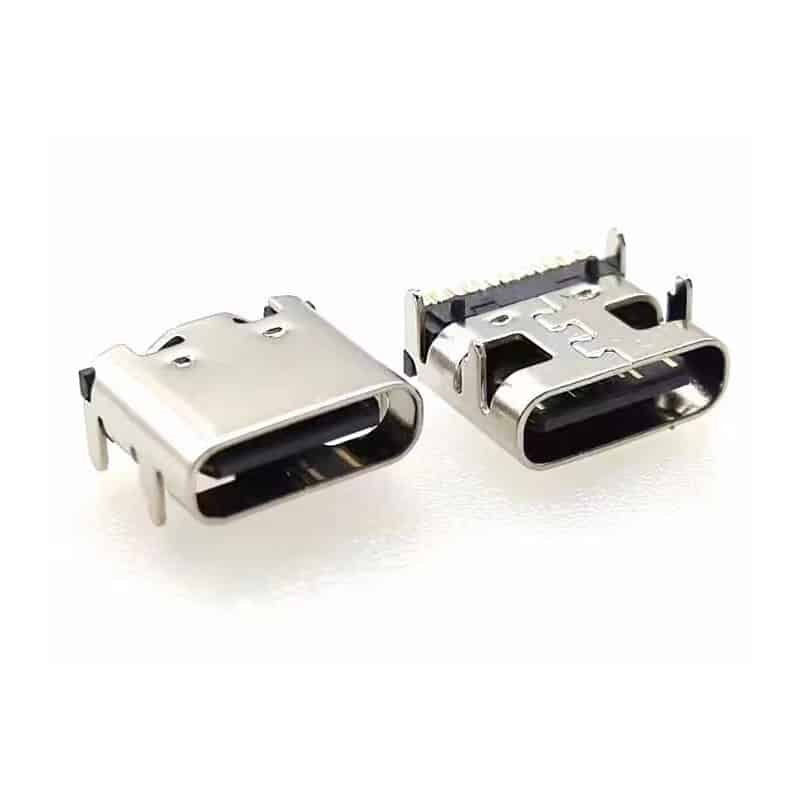


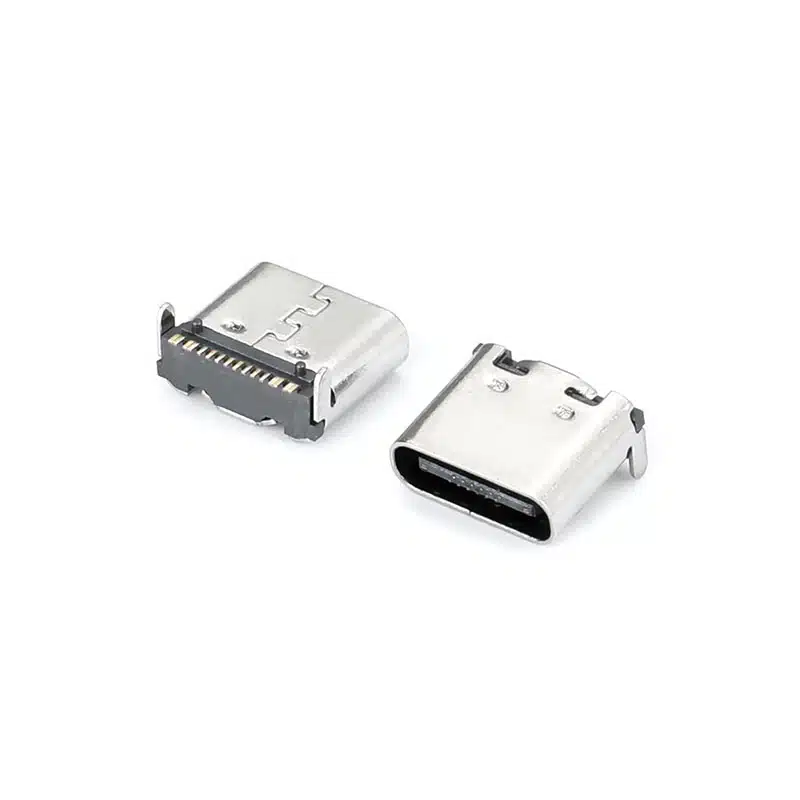


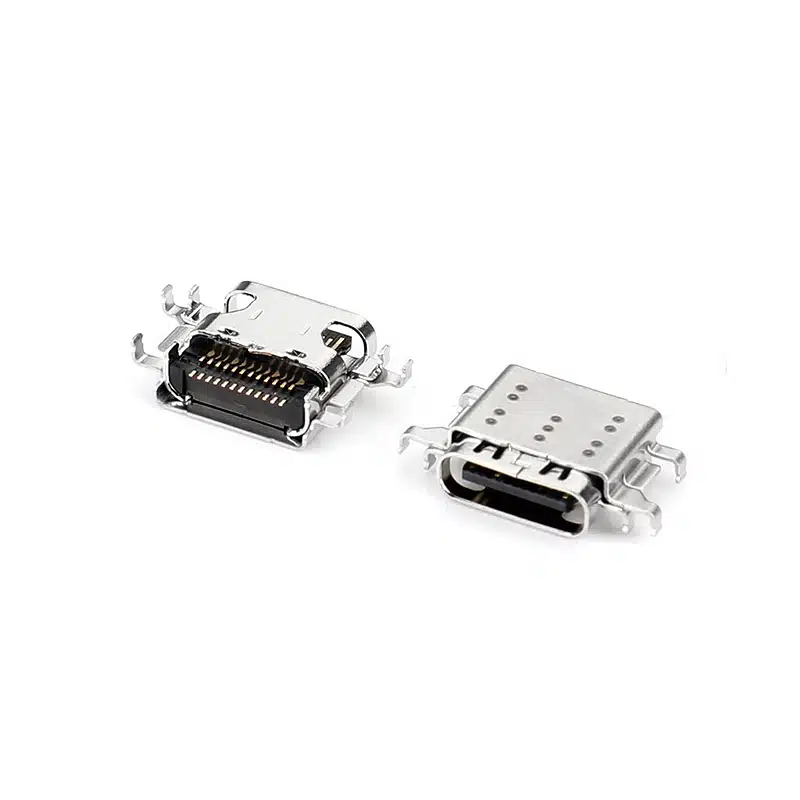


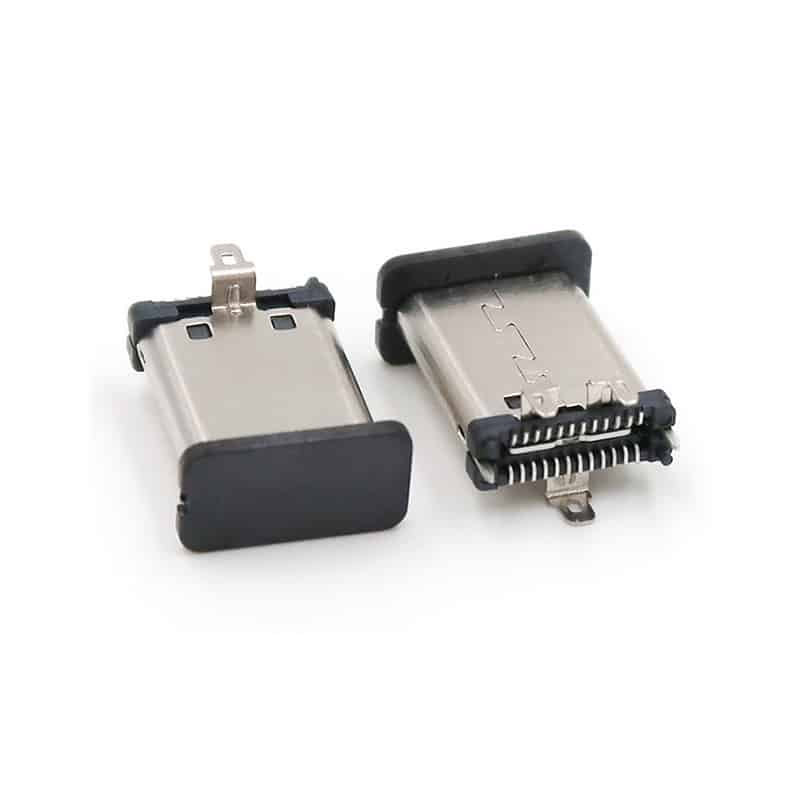


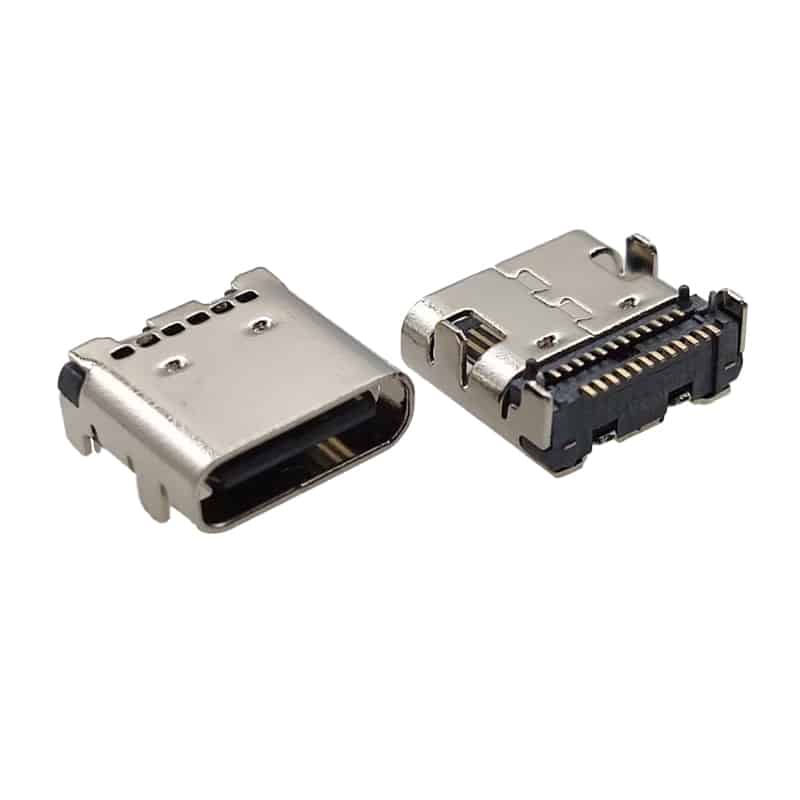


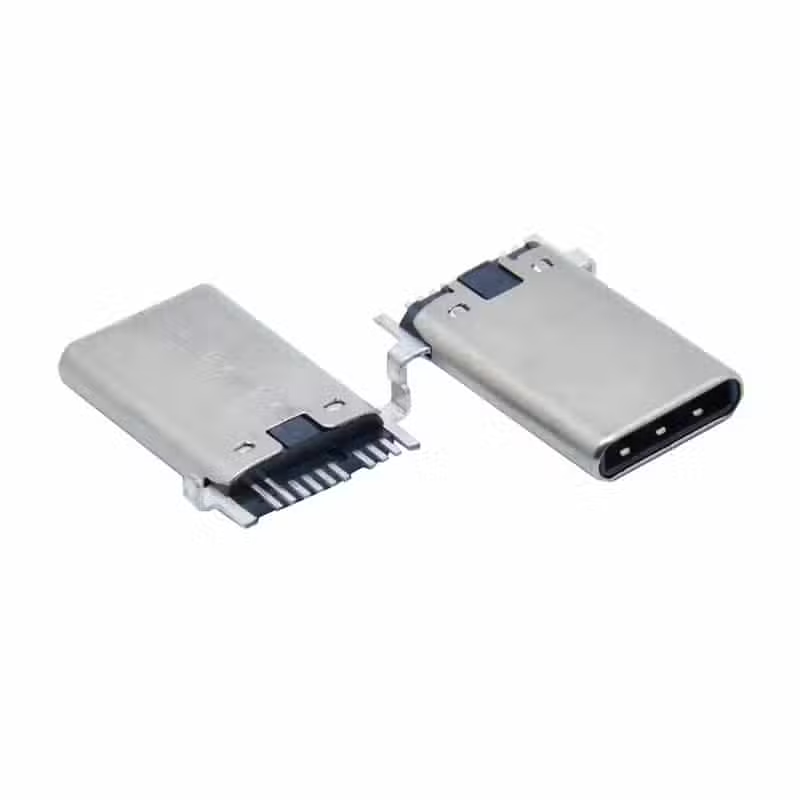


Full 24‑pin models support bandwidth up to 40 Gbps, making them fully compatible with Thunderbolt 4, USB 3.2, and legacy USB standards.
Engineered for high‑current applications, these connectors are 5A / 240W USB PD ready, supporting fast charging for laptops, power banks, and industrial devices.
Full‑featured versions support DisplayPort 1.4 (8K@60Hz) and HDMI Alt‑Mode, allowing video, data, and power through a single interface.
Available with IP67 and IP68 ratings, utilising silicone gasket sealing against dust and water immersion — ideal for marine, outdoor, and medical environments.
Rated for 10,000+ mating cycles, ensuring long‑term reliability in consumer and industrial applications.
Offers mid‑mount (recessed) and ultra‑slim profiles to reduce vertical PCB height in thin devices like tablets and wearables.
Manufactured with high‑temperature LCP insulation, gold‑plated copper alloy contacts, and stainless steel shielding for superior signal integrity and EMI protection.
24‑Pin (full‑featured) | 16‑Pin (USB 2.0 + 5A charging) | 6‑Pin (charging‑only / IoT).
Supports SMT (Surface Mount), DIP (Through‑Hole), Vertical, Right‑Angle, and Flank‑Mount assembly processes.
Fully compliant with RoHS 3 (EU 2015/863) and REACH SVHC regulations. Produced under ISO 9001 certified quality management systems.
Decades of experience in connector design, material science, and process engineering. We offer custom design support and technical guidance from concept to production.
ISO 9001 certified management systems govern every manufacturing step. Each USB Type‑C connector undergoes rigorous inspection and testing to guarantee consistent reliability.
Vertical integration and efficient production enable direct factory pricing – delivering exceptional value for startups and enterprises alike, without sacrificing quality.
Serving consumer electronics, industrial automation, automotive, medical, and telecom sectors worldwide. Trusted partner for interconnect solutions across borders.
Expert assistance for connector selection, PCB layout, assembly optimization, and troubleshooting – available throughout your product development lifecycle.
USB-C charging & data port for slim, high-performance notebooks.
Slim form factor designs that support power and display over a single cable.
High‑current input/output for fast charging of portable batteries.
Multi‑port USB‑C hubs that expand connectivity for laptops and desktops.
Ruggedized data interfaces for factory automation and harsh environments.
In‑vehicle USB charging and infotainment connectivity.
Portable diagnostic tools requiring reliable, clean power and data.
Smart watches, fitness trackers – miniature connectors for compact designs.
Waterproof charging ports for outdoor and sports recording devices.
Outdoor sensor nodes with robust connectors for long‑term deployment.
IP68 sealed connectors resistant to water and corrosion.
Compact PCB designs for true wireless stereo earbud charging cases.
A USB C connector, also known as USB Type-C, is a 24-pin reversible connector standard defined by the USB Implementers Forum (USB-IF). It supports data transfer, power delivery, and video output through a single compact interface, and is distinguished by its symmetrical design that allows insertion in either orientation.
USB-C is the physical connector standard (the shape and pins), while USB4 is the data protocol that runs over USB-C cables. USB4 offers speeds up to 40 Gbps (and up to 80 Gbps with certified cables) and supports multiple data and display protocols simultaneously. Not all USB-C connectors support USB4 — full 24-pin configurations with proper shielding are required.
USB-C connectors are available in several pin configurations: 6-Pin (power only, no data), 16-Pin (USB 2.0 data + power), and 24-Pin (full-featured with USB 3.x/USB4, DisplayPort, and PD). The pin count determines functionality and cost, allowing designers to choose the right balance for their application.
A 16-pin USB-C connector removes the high-speed data transmission pins (TX/RX differential pairs), supporting only USB 2.0 speeds (480 Mbps) while retaining PD fast charging. A 24-pin USB-C connector includes all pins, supporting USB 3.x/USB4 high-speed data (up to 40 Gbps), DisplayPort video output, and audio transmission.
A 6-pin USB-C connector retains only VBUS (power), GND (ground), and CC1/CC2 (configuration channel) pins. It supports charging only, with no data transfer functionality. These are ideal for simple applications like electric toothbrushes, small fans, LED desk lamps, and other devices that only need to draw power via USB.
USB-C connectors are available in three main mounting styles: Top-Mount (surface mount on top of the PCB, most common), Mid-Mount (recessed into the PCB, reduces overall height by embedding the connector), and Vertical (connector stands perpendicular to the PCB, ideal for edge-mounted ports).
Standard USB-C connectors are typically rated for 3A to 5A per VBUS pin. With USB Power Delivery (PD), USB-C can deliver up to 5A at 20V (100W) or up to 48V (240W) with EPR (Extended Power Range) support. Actual current capacity depends on the connector design, PCB layout, and cable specification.
Standard USB-C connectors are rated for 10,000 mating cycles minimum per USB-IF specification. Premium connectors can achieve 16,000+ cycles. The mating cycle rating is a key indicator of mechanical durability, especially important for applications with frequent plugging and unplugging.
Waterproof USB-C connectors feature additional sealing (gaskets, epoxy, or molded housings) to achieve IP67 or IP68 ratings, protecting against dust and water ingress. They are essential for outdoor, automotive, industrial, and marine applications where environmental exposure is a concern.
MOQ varies by connector type, pin configuration, and mounting style. Standard catalog items typically have MOQs starting at 1,000–3,000 pieces. Custom configurations may require higher MOQs. Contact Vistar Electronics sales team for specific MOQ and pricing information.
Yes, Vistar Electronics offers customization for USB-C connectors including pin count (6, 16, 24), mounting style (top-mount, mid-mount, vertical), shell material and plating, gold plating thickness, waterproof rating, and custom dimensions. Contact our engineering team with your specific requirements.
Standard lead time for USB-C connector orders is 2–4 weeks for catalog items. Custom configurations typically require 4–6 weeks depending on complexity. Expedited options may be available for urgent requirements — please contact Vistar Electronics sales team.
For a detailed comparison of pin counts, mounting styles, and power ratings, read our complete USB-C connector selection guide.
For official USB-C specifications, compliance documents, and technical background, refer to these external resources:
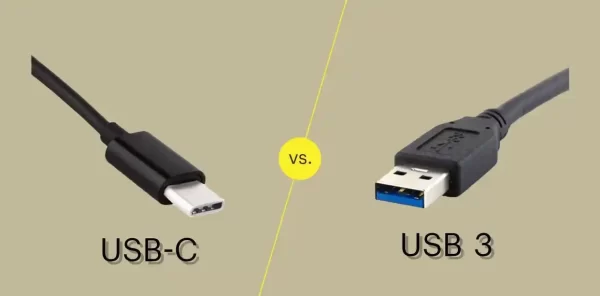
If you’re specifying a USB connector for a new product, you’ve probably run into three overlapping terms: USB-C, USB 3.0, and USB4....

You have spent three weeks finalizing a board design. The BOM is locked, the PCB is routed, and the prototype is on...

Understanding the differences in PCB layout between the USB-C 24-pin full-featured and 16-pin USB 2.0 connectors is crucial for ensuring stable device...


