
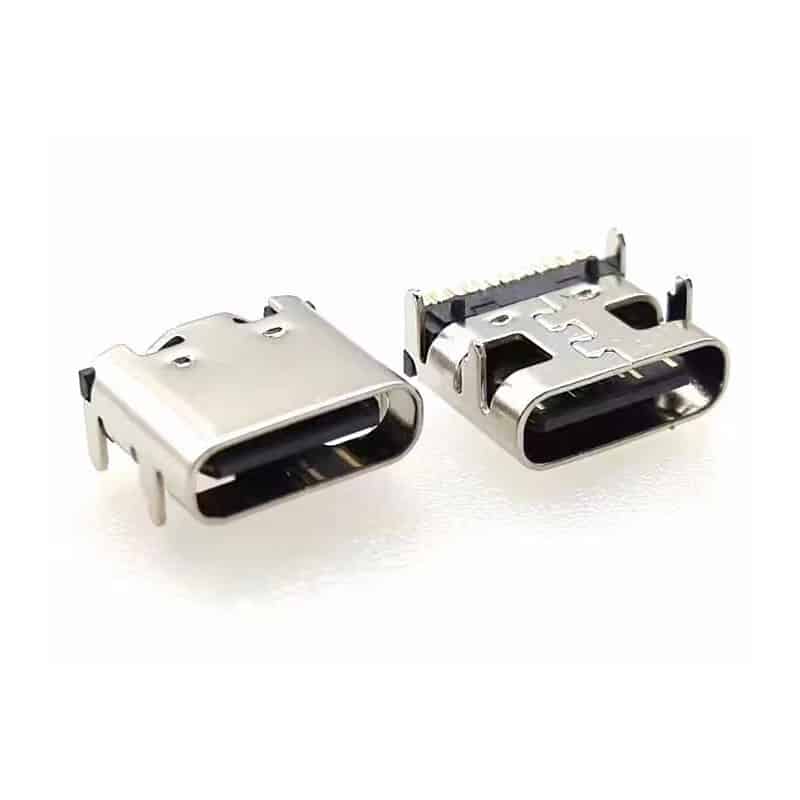
USB C 16 pin connector — USB 3.1 Type-C Female Right Angle PCB Mount (USB-TC16-F01)
Product Overview
The USB C 16 Pin Connector Right Angle PCB Mount is a compact and reliable USB Type‑C female connector designed for modern electronic devices requiring efficient board‑level integration, stable charging performance, and durable mechanical reliability. Featuring a right‑angle PCB mounting structure, this connector is optimized for compact electronic products where horizontal PCB orientation and space‑saving layouts are essential.
As USB Type‑C technology rapidly becomes the universal standard for charging and connectivity across consumer electronics, industrial equipment, automotive systems, communication devices, and smart IoT products, manufacturers increasingly require durable 16 Pin USB‑C connectors capable of supporting stable electrical performance and reliable long‑term operation.
This connector adopts a 16 pin USb‑C connectors architecture, providing a cost‑effective and compact solution for charging‑oriented applications while maintaining the core advantages of the USB Type‑C interface, including reversible insertion and stable power transmission. Compared with full 24‑pin USB‑C connectors, the 16‑pin structure helps reduce connector size and PCB complexity while still supporting reliable charging and embedded device connectivity.
The right‑angle PCB mount design is specifically optimized for slim electronic products and compact PCB layouts where connector height and internal space utilization are critical. The horizontal mounting orientation helps improve cable routing efficiency and device structure flexibility in portable electronic products.
Supporting stable charging and low‑power communication applications, this USB‑C connector is widely used in portable consumer electronics, embedded systems, charging accessories, smart home products, industrial control equipment, and automotive communication modules.
The connector is engineered for reliable mechanical performance with durability rated for over 10,000 mating cycles, ensuring stable long‑term operation even under repeated insertion and demanding usage conditions.
According to the official USB Implementers Forum (USB‑IF), USB Type‑C has become the global standard for modern electronic connectivity because of its compact reversible interface, scalable power delivery capability, and user‑friendly design.
For engineers requiring detailed technical specifications regarding USB Type‑C connector architecture and interface standards, the official USB Type‑C Cable and Connector Specification provides comprehensive engineering documentation.
This connector is also suitable for charging systems compatible with the official USB Power Delivery Specification, supporting intelligent charging and modern power management applications.
For additional USB‑C technical background and interface information, developers may also review the USB‑C Technology Overview.
The USB‑C 16 Pin Connector Right Angle PCB Mount provides an excellent balance of compact structure, stable electrical performance, manufacturing efficiency, and long‑term mechanical durability for next‑generation electronic product development.
Specifications of usb-c smt connector
| Parameter | Specification |
|---|---|
| Product Name | USB C 16 Pin Connector Right Angle PCB Mount |
| Part Number | USB-TC16-F01 |
| Connector Type | USB Type-C Female Receptacle |
| Pin Count | 16 Pins |
| Mounting Type | Right Angle PCB Mount |
| USB Standard | USB 2.0 Charging Applications |
| Rated Current | 3A Max |
| Rated Voltage | 30V DC |
| Contact Material | Copper Alloy |
| Housing Material | High Temperature Thermoplastic |
| Durability | 10,000 Mating Cycles |
| Operating Temperature | -40°C to +85°C |
| Packaging | Reel / Tray |
| Application | Charging & Compact Embedded Devices |
Key Features of usb-C receptacle
Compact 16-Pin USB-C Design
Provides a space-saving and cost-effective solution for charging-oriented electronic applications.
Right Angle PCB Mount Structure
Optimized for compact PCB layouts and horizontal connector installation requirements.
Reversible USB Type-C Interface
Supports easy plug insertion from either direction for improved user convenience.
Stable Charging Performance
Provides reliable electrical transmission for charging and low-power communication applications.
Durable Mechanical Reliability
Engineered for more than 10,000 insertion and removal cycles.
Efficient PCB Space Utilization
Ideal for slim electronic products and compact embedded system designs.
Applications of USB C female connector PCB
FAQ
What is the advantage of a 16-pin USB-C connector?
Why choose a right-angle PCB mount connector?
Does this connector support USB Power Delivery?
Is this connector compatible with USB 3.1?
What industries commonly use USB-C PCB mount connectors?
What is the durability rating of this connector?

24 Pin USB 3.1 Type‑C Female Connector – 10Gbps Full‑Featured High‑Speed USB‑C Receptacle for Demanding Applications

USB C Female Connector — 24 Pin SMT+DIP Extended Shell, Top-Mount Horizontal Receptacle

USB Type C Surface Mount Connector 16P — USB-TC16-F04 16 Pin SMD Horizontal Receptacle with 5A Rating
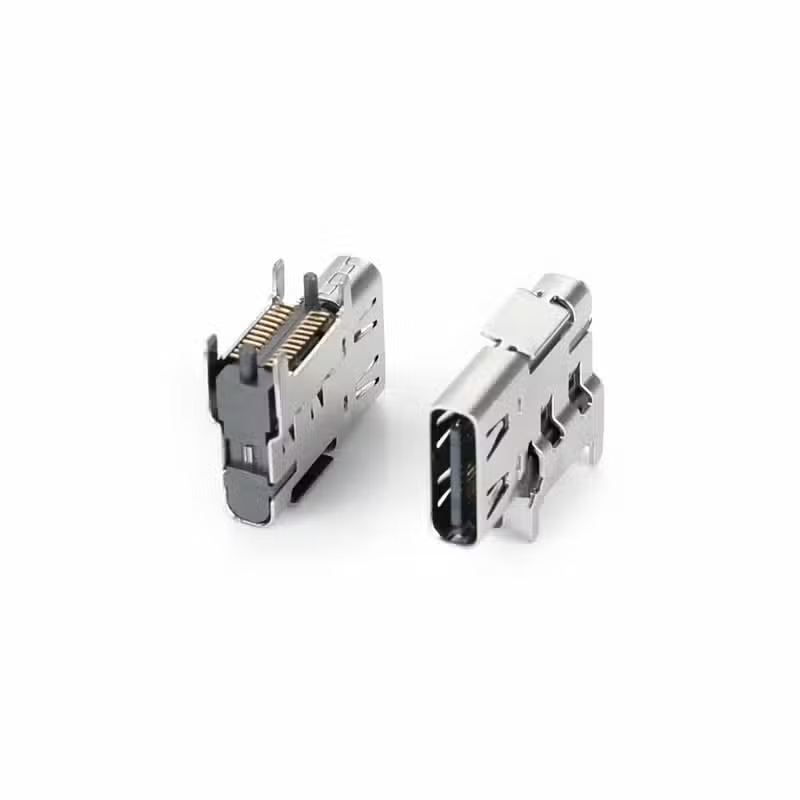
USB Type-C Connector 24 Pin Flank SMT (USB-TC24-F28M02)

USB Connector USB Type C 16 Pin SMT Receptacle for Charging & Embedded PCB Applications
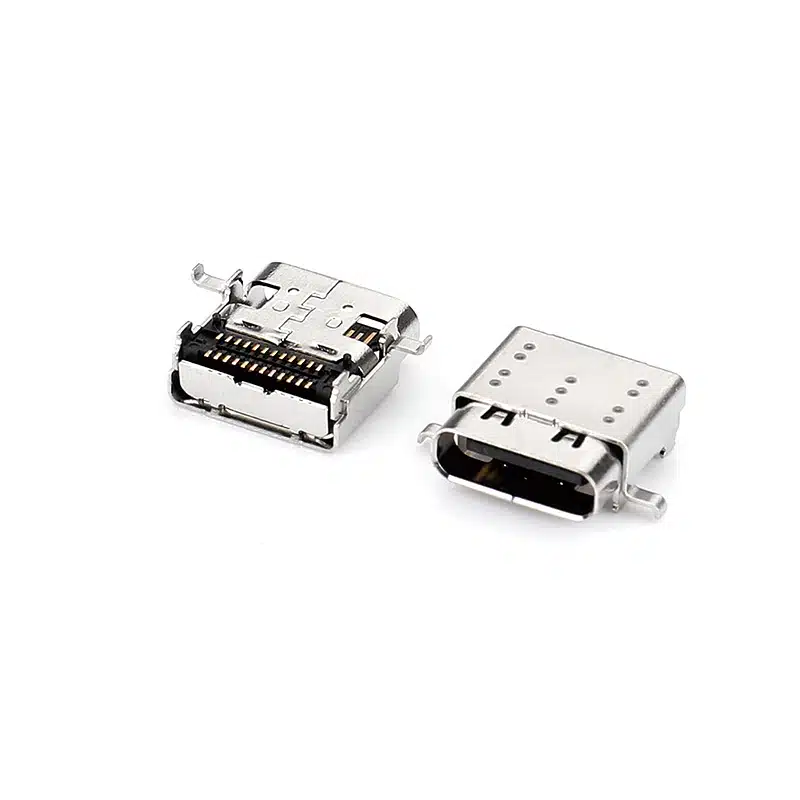
USB C Connector SMT 24 Pin — Right-Angle USB-C Receptacle, CL=1.57mm L=9.17mm, USB-TC24-F22

USB-TC24-F18A — 24 Pin USB Type-C Receptacle, Vertical SMD + Through-Hole Pegs, H=10.35mm

6 Pin USB Type-C Connector SMT — Right Angle USB-C Female for Compact Charging & Data Applications

USB-C Connector Pinout Guide for Engineers: 24-Pin vs 16-Pin Signal Assignment & PCB Routing
When moving from the pinout to a physical part, orientation matters as much as pin count. The USB-TC24-F12 (vertical SMT solder mount)...

USB-C 24-Pin Full-Featured vs. 16-Pin USB 2.0: Key PCB Layout Considerations
Understanding the differences in PCB layout between the USB-C 24-pin full-featured and 16-pin USB 2.0 connectors is crucial for ensuring stable device...
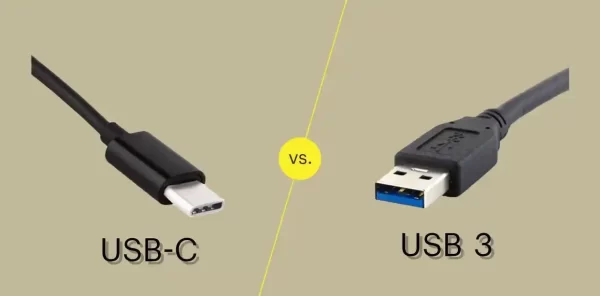
USB-C vs USB 3.0 vs USB4: Which Connector Do You Need for Your Next Design?
If you’re specifying a USB connector for a new product, you’ve probably run into three overlapping terms: USB-C, USB 3.0, and USB4....