

DPDT slide switch Vertical 6pin
The SS-22D15 is a dpdt slide switch 6 pin designed for vertical through‑hole PCB mounting. This dual‑pole double‑throw switch provides independent control of two circuits in a compact, easy‑to‑use slider format. With gold‑plated contacts and a rated life of 10,000 cycles, it is ideal for signal routing, mode selection, and on‑off switching in industrial and consumer electronics. RoHS & REACH compliant. Tube packaging. MOQ 1,000 pcs. Free sample for qualified projects.
What Is a DPDT Slide Switch?
A DPDT slide switch (Double Pole Double Throw) is an electromechanical switch that allows a single actuator to control two independent circuits simultaneously. Each pole has a common terminal that can connect to either of two output terminals, giving a total of six pins. This configuration is widely used for polarity reversal, signal routing, and dual‑channel on‑off control. When implemented as a dpdt slide switch vertical, the actuator moves perpendicular to the PCB surface, making it easy to access from the top of an enclosure while saving horizontal board space. The internal sliding contact mechanism provides a positive detent action, ensuring the switch stays in the selected position without power. Engineers choose a 6‑pin DPDT slide switch when they need a simple, reliable way to switch two circuits with a single manual action.
6 Pin DPDT Slide Switch Pinout Explained
Understanding the pinout of a 6 pin slide switch dpdt is essential for correct PCB layout. The six pins are arranged in two rows of three, each row representing one pole. The center pin in each row is the common (COM) terminal. Sliding the actuator to one side connects the common to one end pin; sliding to the other side connects it to the opposite end pin. In an ON‑ON configuration, only two positions are available, and the common is always connected to one of the two throws. In an ON‑OFF‑ON configuration, a middle position disconnects both throws. A 6 pin slide switch dpdt thus provides two completely independent switching channels, which can be used for stereo audio, differential signals, or separate control lines.
- Row 1 (Pole A): Pin 1 (Throw 1) – Pin 2 (Common) – Pin 3 (Throw 2)
- Row 2 (Pole B): Pin 4 (Throw 1) – Pin 5 (Common) – Pin 6 (Throw 2)
Vertical vs Horizontal DPDT Slide Switch
A vertical slide switch dpdt has its actuator oriented perpendicular to the PCB, while a horizontal version moves parallel to the board surface. Vertical slide switches save board space because the actuator occupies the area above the component rather than beside it. They are easier to integrate into front‑panel or top‑access enclosures, where the user slides the actuator up and down. Horizontal slide switches, on the other hand, are suited for edge‑mounted PCBs where side access is required. Both types share the same electrical characteristics, so the choice between them is primarily mechanical. For designs that require a compact footprint and straightforward panel integration, a vertical slide switch dpdt is often the preferred option.
DPDT Slide Switch Electrical Functions
A 2P2T slide switch 6 pin can perform several critical electrical functions. The most common are signal routing, where two independent audio or data channels are switched between two sources, and polarity reversal, where the two poles are cross‑wired to reverse the direction of a DC motor or actuator. This switch can also serve as a dual on‑off control, disconnecting both the positive and negative supply rails simultaneously for added safety. In industrial settings, a 2P2T slide switch 6 pin may be used to select between two preset operating modes or to manually override an automated system. The versatility of the DPDT configuration makes it a staple in control panels, test fixtures, and embedded development boards.
Applications of 6 Pin DPDT Slide Switch
Stereo input selection, tape monitor loops, and equalizer bypass switching in mixing consoles and Hi‑Fi systems.
Mode selection, manual override, and function toggling on PLCs and automation controllers.
Range selection, filter switching, and configuration settings on test and measurement devices.
Channel selection and signal routing in two‑way radios, intercoms, and network equipment.
Boot mode selection and peripheral configuration on development boards and single‑board computers.
Dual‑supply rail selection and battery backup switching in power management systems.
Reversing the polarity of small DC motors in robotics and automation projects.
PCB Mount DPDT Slide Switch Options
Vistar Electronics offers a complete range of PCB‑mount DPDT slide switches to suit different design requirements. In addition to the vertical through‑hole version featured on this page, we also supply right‑angle horizontal slide switches for side‑actuated applications, surface‑mount slide switches for automated assembly, and miniature slide switches for space‑constrained layouts. Many models are available with multiple actuator heights and travel distances. For custom requirements, our engineering team can modify pin length, plating material, and detent force. Explore our full slide switch category: Slide Switch Category, Horizontal Slide Switch, Vertical Slide Switch, and 2P2T Slide Switch.
How to Choose a DPDT Slide Switch
Selecting the right DPDT slide switch involves evaluating several key parameters:
- Current and voltage rating: Ensure the switch contacts can handle the maximum load. The SS-22D15 is rated for 0.5A at 12V DC, suitable for most signal‑level applications.
- Mounting type: Through‑hole, surface‑mount, vertical, or horizontal – pick the orientation that fits your enclosure and assembly process.
- Actuator height: Choose an actuator length that protrudes enough for comfortable operation through the panel.
- Detent force: A stronger detent prevents accidental switching in high‑vibration environments.
- Life cycles: Look for a switch rated for at least 10,000 cycles for long‑term reliability.
- Circuit configuration: Decide between ON‑ON and ON‑OFF‑ON depending on whether a middle off position is required.
By matching these specifications to your design, you can ensure reliable operation throughout the product’s lifecycle.
Technical Specifications
| Item | Value |
|---|---|
| Part Number | SS-22D15 |
| Switch Type | DPDT Slide Switch |
| Circuit | 2P2T (Double Pole Double Throw) |
| Pins | 6 |
| Mounting | Through‑Hole (DIP), Vertical |
| Actuator Height | 3.5mm (standard) |
| Operation | ON‑ON (other options available) |
| Rating | 0.5A 12V DC |
| Contact Resistance | ≤50mΩ |
| Insulation Resistance | ≥100MΩ |
| Mechanical Life | 10,000 Cycles |
| Contact Material | Phosphor Bronze, Gold over Nickel |
| Housing | PBT, UL94V‑0 |
| Operating Temperature | −25°C to +85°C |
| Compliance | RoHS & REACH |
Frequently Asked Questions – DPDT Slide Switch 6 Pin
What is a 6 pin DPDT slide switch?
A 6 pin DPDT slide switch has two independent poles, each with a common terminal and two output terminals. The SS-22D15 is a vertical PCB‑mount version of this switch.
What is the difference between SPDT and DPDT slide switch?
An SPDT switch controls one circuit, while a DPDT switch controls two independent circuits simultaneously. DPDT provides greater flexibility for stereo audio, polarity reversal, and dual‑channel switching.
Can a DPDT switch control two circuits?
Yes. Each pole operates independently, so two completely separate circuits can be switched at the same time with a single slider movement.
What is a vertical slide switch used for?
A vertical slide switch is used when the PCB is mounted horizontally and the switch actuator must be accessed from the top, such as through a slot in the enclosure lid.
Is a DPDT slide switch suitable for PCB mounting?
Yes. The SS-22D15 is specifically designed for through‑hole PCB mounting and is compatible with wave soldering and manual soldering.
What is ON‑ON vs ON‑OFF‑ON?
ON‑ON means the switch has two active positions with no center off. ON‑OFF‑ON adds a middle position where both throws are disconnected, useful for adding a stop state.
Your Source for Industrial DPDT Slide Switches
DPDT slide switches are widely used in electronic products requiring dual‑circuit control such as signal routing, power selection and motor direction control. The 6 pin slide switch dpdt configuration allows two independent poles to operate simultaneously, making it ideal for industrial equipment, communication systems and embedded PCB designs. As a vertical slide switch dpdt specialist, Vistar Electronics provides high‑quality switches with multiple mounting options, stable electrical performance and OEM customization for global customers. This 2P2T slide switch 6 pin is a proven solution for designers who need manual, reliable switching without software. Explore our slide switch portfolio: Slide Switch Category, Vertical Slide Switch, Horizontal Slide Switch, and 2P2T Slide Switch. For technical guides, see our articles on SPDT vs DPDT Slide Switch, How DPDT Slide Switch Works, and Slide Switch Types Explained. For industry standards, refer to IEC Standards and ISO Standards. To request a free sample of the SS‑22D15 or discuss your requirements, contact sales@vistarelectronics.com.

6 pin DIP slide switch dpdt knob

3 pins slide switch 1p2t

3 way vertical slide switch 1p3t
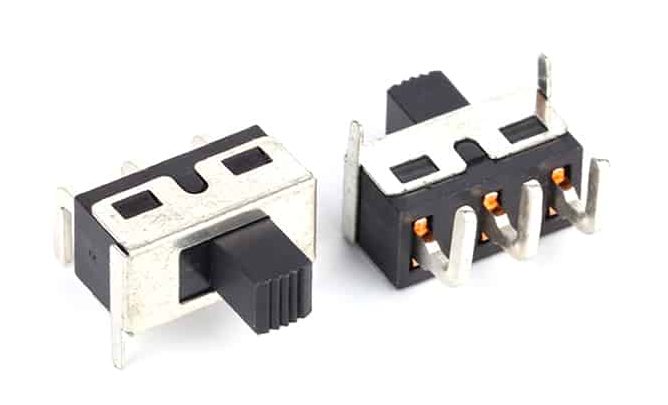
Miniature Slide Switch – 3-Pin SPDT PCB Switch

Panle Mount 2p2t slide switch 6pin with Screw Hole

2P5T Slide Switch Vertical DIP Type 12 Pin for Multi-Position PCB Applications

3 Pin Vertical Slide Switch for DIP PCB Mounting

Vertical slide switch spdt 3pin
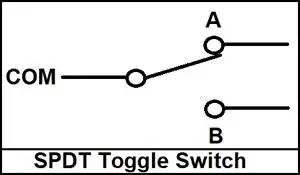
SPDT Slide Switch: A Classic Solution for Precision Control and Circuit Routing
In the control and signal path selection of electronic systems, slide switches have always held an indispensable position due to their intuitive...

Mini Slide Switch Reliability: 8 Factors That Affect Long-Term Performance
What really determines mini slide switch reliability? Explore 8 factors from contact material to PCB mounting that impact lifespan. Improve durability in...

Mini Slide Switch: The Complete Guide to Types, Applications & Selection
Explore the complete mini slide switch guide covering types, specifications, applications, and selection tips. Learn how engineers choose reliable slide switches. A...