

4 pin SMD Detector switch 3.6*4.8
4 Pin SMD Detector Switch — Product Overview (SMD Detector Switch for Compact PCB Designs)
Vistar 4 pin SMD detector switch with 3.64mm height, 0.5A/12V rating, and 50,000-cycle life. Ideal for lid detection, tray sensing, and position detection in consumer electronics. Free sample.
The DS-014 is a SMD detector switch — a 4-pin surface-mount detection switch engineered for applications requiring reliable position sensing in a compact footprint. This 4 pin detector switch is commonly used for detecting the presence or position of mechanical components — lid closure, media insertion, door position, or tray seating — in consumer electronics, office automation equipment, and portable devices.
This PCB mount detector switch features a 3.64mm low-profile design, making it suitable for space-constrained PCB layouts. The 4-pin configuration provides redundant electrical contacts for enhanced reliability, with two contacts for the switching circuit and two mechanical anchor pins for improved PCB retention. The SMT termination supports automated reflow soldering, enabling high-volume production workflows.
Manufactured in an ISO 9001:2015 certified facility, this micro switch detector is fully compliant with RoHS 3 and REACH regulations. Available in tape-and-reel packaging for automated SMT assembly, with OEM customization options for volume orders.
SMD Detector Switch — Full Technical Specifications
Below are the complete specifications for the SMD detector switch DS-014, covering electrical, mechanical, and environmental ratings.
| Parameter | Specification | Notes |
|---|---|---|
| Part Number | DS-014 | Standard catalog item |
| Product Type | Detector Switch / Detection Switch | 4-pin SMD |
| Profile Height | 3.64mm | Low-profile design |
| Pin Count | 4 Pins | 2 electrical + 2 mechanical anchor |
| Mounting Type | SMT (Surface Mount) | — |
| Contact Rating | 0.5A at 12V DC | — |
| Contact Resistance | ≤ 100 mΩ | Initial |
| Insulation Resistance | ≥ 100 MΩ | At 100V DC |
| Dielectric Strength | 250V AC for 1 minute | No breakdown |
| Operating Force | 30–70 gf | Actuation force |
| Mechanical Life | 50,000 cycles | — |
| Contact Material | Copper Alloy | Silver plated |
| Housing Material | High-Temperature Plastic | UL94V-0, reflow compatible |
| Operating Temperature | -25°C to +85°C | Commercial / industrial grade |
| Packaging | Reel / Tray | SMT assembly ready |
| Compliance | RoHS 3, REACH | Global export ready |
Specifications should be verified against the latest product drawing and engineering documentation before production release. Electrical performance depends on the complete detection circuit design, including the switch, PCB layout, pull-up/pull-down resistors, and load requirements.
4 Pin Detector Switch — Key Features and Advantages
3.64mm Low Profile — Space-Saving Design
The compact 3.64mm height allows this 4 pin detector switch to fit into slim device designs where vertical clearance is limited. Ideal for portable electronics, laptops, and thin-form-factor devices.
4-Pin Configuration — Enhanced Reliability
Two electrical contacts provide the switching function while two mechanical anchor pins improve PCB retention. This SMD detector switch design reduces the risk of solder joint failure under mechanical stress.
Positive Actuation Feel
The spring-loaded mechanism delivers a crisp tactile response at actuation, providing clear feedback when the detection condition is met — lid closed, media inserted, or component seated.
SMT Production Ready
Available in tape-and-reel packaging for high-volume pick-and-place assembly. The high-temperature housing withstands standard reflow soldering profiles up to 260°C.
50,000 Mechanical Cycles
Rated for 50,000 actuation cycles, this PCB mount detector switch is built for the typical lifetime of consumer and office equipment applications.
RoHS 3 & REACH Compliant
Fully compliant with EU environmental directives. Documentation available for global export and supply chain audits.
4 Pin Detector Switch — Enhanced PCB Retention and Reliability
A 4 pin detector switch offers several advantages over 2-pin alternatives. The two additional pins — typically mechanical anchor pins — provide enhanced PCB retention, reducing the risk of solder joint failure under mechanical stress. This is particularly important in applications where the switch is subjected to repeated actuation or vibration.
The DS-014’s 4-pin configuration includes two electrical contacts that form the switching circuit, and two mechanical anchor pins that pass through the PCB for additional stability. This design reduces the strain on the SMT solder joints, improving long-term reliability in high-cycle applications.
For engineers designing products with frequent mechanical actuation — such as lid detection in laptops or tray detection in media players — the 4-pin detector switch provides a reliable solution that balances cost, performance, and mechanical durability.
PCB Mount Detector Switch — Layout and Footprint Guidelines
A PCB mount detector switch requires careful attention to footprint design and component placement. The switch should be positioned so that the actuator aligns correctly with the mechanical component it is detecting — whether a lid, door, tray, or cartridge.
When designing the PCB footprint for this PCB mount detector switch, engineers should consider:
- Actuator alignment: The switch must be positioned so the actuator is contacted by the moving component at the correct point in its travel.
- PCB edge clearance: Allow sufficient clearance for the switch body and actuator movement.
- Pad design: Follow the manufacturer’s recommended land pattern for optimal solder joint reliability.
- Mechanical support: The mechanical anchor pins should have adequate pad size and through-hole clearance.
The switch is only one element of the complete detection circuit. PCB trace routing, pull-up/pull-down resistors, and controller input configuration all affect overall system performance.
SMD Detector Switch vs Through-Hole — Which One to Choose?
When selecting a detector switch for your PCB, understanding the differences between SMT and through-hole mounting is essential.
| Feature | SMT Detector Switch (DS-014) | Through-Hole Detector Switch |
|---|---|---|
| Mounting Method | Surface mount — pads on PCB surface | Through-hole — pins pass through PCB |
| PCB Holes Required | No — surface pads only | Yes — drilled holes |
| Assembly Process | Reflow Soldering — automated | Wave / Selective Soldering |
| PCB Density | Higher — no through-hole clearance | Lower — requires hole clearance |
| Mechanical Strength | Good — pad design + anchor pins | Higher — dual-sided solder joints |
| Best For | Compact Electronics, High-Volume Production | Industrial Equipment, High-Reliability |
The DS-014 is an SMT detector switch. Choose this for compact PCB designs and automated assembly. For applications requiring maximum mechanical strength, consider through-hole detector switch options.
Where to Use This PCB Mount Detector Switch — Applications Across Industries
As a versatile PCB mount detector switch, the DS-014 is found across a wide range of applications where reliable position and presence detection is required in a compact SMT package.
4 Pin SMD Detector Switch — Frequently Asked Questions
What is a 4 pin SMD detector switch?
A 4 pin SMD detector switch is a surface-mount component used to detect the presence, position, or status of mechanical components in electronic devices. The DS-014 features a 3.64mm profile, 4-pin configuration, and SMT termination, making it suitable for compact PCB designs and automated assembly.
What is the difference between a detector switch and a tact switch?
A detector switch is designed for position and presence sensing — it is typically actuated by a mechanical component such as a lid, door, or tray. A tact switch is designed for user input — it is actuated by a person pressing a button. Detector switches usually have a smaller actuation force and are optimized for long mechanical life.
What is the operating life of the DS-014?
The DS-014 is rated for 50,000 mechanical cycles, ensuring reliable performance in the typical lifetime of consumer and office equipment applications.
What is the current rating of this switch?
The DS-014 is rated for 0.5A at 12V DC, making it suitable for low-power detection applications.
Is this switch suitable for SMT assembly?
Yes. The DS-014 is designed for SMT assembly and is available in tape-and-reel packaging for high-volume pick-and-place machines. The high-temperature housing withstands standard reflow soldering profiles.
What is the actuation force of this detector switch?
The DS-014 has an operating force range of 30–70 gf, providing reliable actuation while minimizing the force required from the mechanical component.
What is the MOQ and can I get a free sample?
Standard MOQ is 1,000 pieces with a 2–4 week production lead time. Free samples are available for qualified engineering and product development projects. Contact sales@vistarelectronics.com with your company details, project description, and part number (DS-014).
Need Custom Detector Switch Solutions?
Vistar Electronics manufactures detector switches in SMT and through-hole configurations with various profile heights and pin configurations. Custom actuator types, plating, and packaging available for OEM projects.
DS-014 — 4 Pin SMD Detector Switch | 3.64mm Low Profile | RoHS & REACH Compliant | OEM/ODM Available

detector switch DIP 4p

Detector Switch SMT 4 Pin for Device Detection, Position Sensing & PCB Control Applications

SMD Detector Switch – 4-Pin PCB Switch, 6.5mm Height

4Pin DIP detect switch 3*6.5

6 Pin Silent Detector Switch — Compact SMT Switch for PCB Position Detection

4 Pin SMT Miniature Detector Switch 2×3×2.5 mm — DS-023 Ultra-Compact Position Sensor for PCB Mount in IoT, Wearables & Consumer Electronics

4pin SMT detector switch 3.8*4.7

Mini Through-Hole Detector Switch 4 Pin Right Angle — DS-012 Micro Detect Switch 50mA DC 12V for Printers, Laptops & Industrial Automation

Detector Switch Selection Guide: How to Choose the Right Component for Precision Detection Applications
Detector Switch Selection Guide. Covers actuators, ratings, sealing & SMT specs for consumer electronics and industrial use. The Silent Failure That Kills...

Detector Switch vs Micro Switch: What’s the Difference?
Detector Switch vs Micro Switch: What’s the Difference? When a product fails in the field, engineers often investigate firmware bugs, PCB defects,...
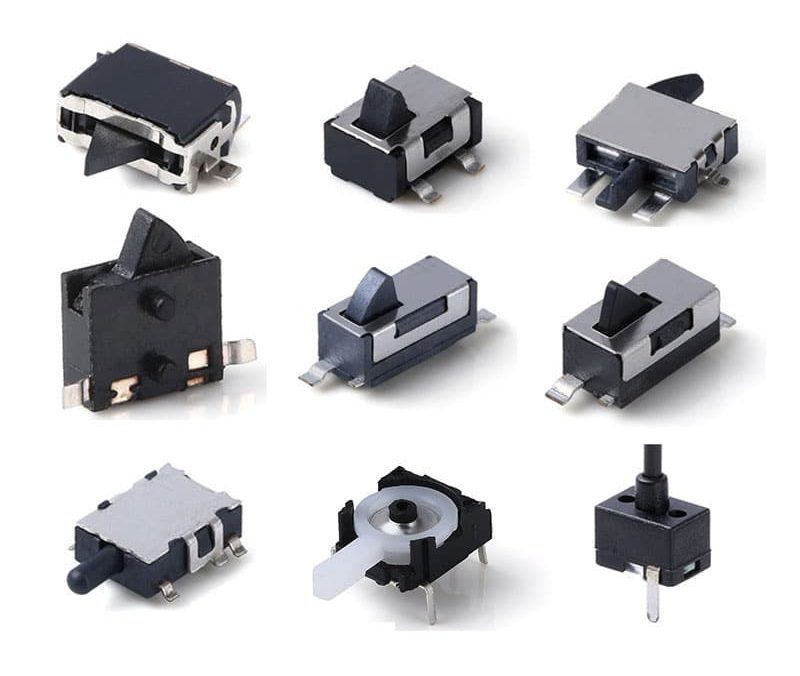
What Is a Detector Switch? Complete Guide for Engineers
In modern electronic products, many critical functions happen silently in the background. A laptop knows when its lid is closed. A printer...