
In modern electronic products, many critical functions happen silently in the background. A laptop knows when its lid is closed. A printer detects paper presence. A smart lock confirms door status. A charging dock recognizes device insertion.
Behind many of these actions is a small but highly important component: the detector switches.
Despite its simple appearance, choosing the wrong detector switch can lead to false triggering, shortened product lifespan, poor user experience, and costly field failures. For design engineers and procurement teams, understanding the detector switch function, internal construction, and application requirements is essential for building reliable electronic products.
This guide explains the detector switch working principle, common switch types, engineering considerations, and practical sourcing strategies to help you select the right solution for your next project.
What Is a Detector Switch?
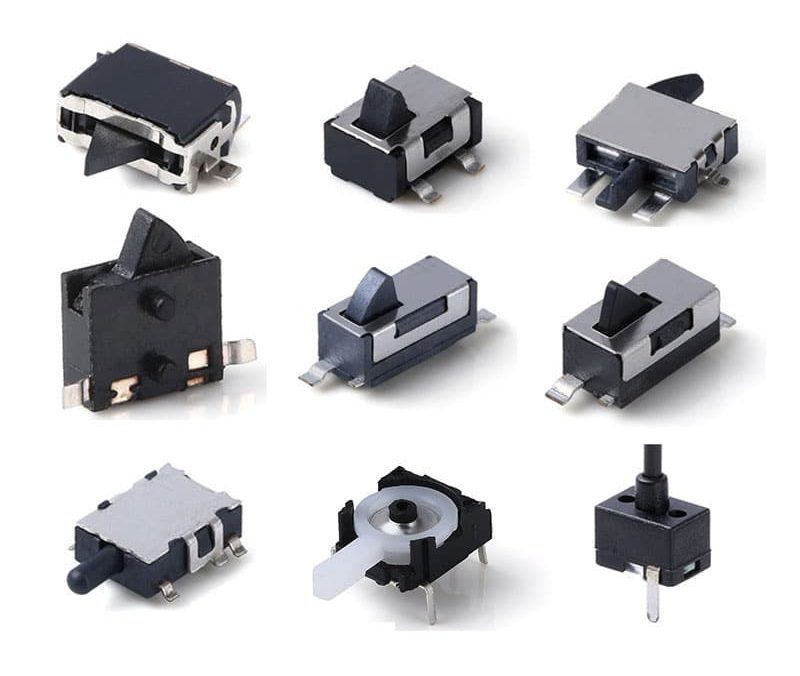
A detector switch is an electromechanical switch designed to detect the physical presence, position, insertion, removal, opening, closing, or movement of an object within an electronic device.
Unlike traditional switches that are intentionally operated by users, detector switches typically operate automatically when a mechanical part changes position.
Their primary purpose is to provide a signal to the control circuit indicating whether a particular condition exists.
Typical examples include:
- Laptop lid open/close detection
- SD card insertion detection
- SIM card presence detection
- Printer paper detection
- Door position sensing
- Battery pack insertion detection
- Docking station connection detection
- Smart appliance cover detection
The switch converts mechanical movement into an electrical signal that can be interpreted by a microcontroller or system processor.
Detector Switch Function in Electronic Systems
The core detector switch function is straightforward:
Detect a physical state and provide electrical feedback to the control system.
However, this simple function supports numerous operational and safety features.
Common Functions
1. Position Detection
The switch determines whether a component is:
- Open
- Closed
- Extended
- Retracted
Examples include:
- Laptop hinges
- Appliance doors
- Equipment covers
2. Presence Detection
The switch verifies whether an object exists in a designated location.
Examples:
- Battery installed
- Cartridge inserted
- Memory card inserted
3. Safety Interlocking
Many industrial and consumer products use detector switches to prevent operation under unsafe conditions.
Examples:
- Printer cover open detection
- Microwave door monitoring
- Industrial equipment guard monitoring
4. Power Management
Detector switches can activate sleep or wake-up functions.
Examples:
- Laptop lid closure
- Smart case activation
- Portable device docking
By providing accurate state information, detector switches help improve reliability, user experience, and energy efficiency.
Detector Switch Working Principle
Understanding the detector switch working principle helps engineers select the correct switch structure and contact configuration.
Basic Operating Mechanism
A detector switch generally consists of:
- Actuator
- Spring mechanism
- Movable contact
- Fixed contacts
- Housing
When an external object presses or releases the actuator, the movable contact changes position and either opens or closes the electrical circuit.
Example Process
Object Not Present
- Actuator remains in default position
- Contacts remain open (or closed)
- Control system reads State A
Object Inserted
- Actuator is displaced
- Contact mechanism changes state
- Control system reads State B
The controller then executes predefined actions based on the detected condition.
Internal Structure of a Detector Switch
Although designs vary between manufacturers, most detector switches contain similar components.
Housing
The housing protects internal components from:
- Dust
- Mechanical damage
- Contamination
Materials commonly include:
- LCP (Liquid Crystal Polymer)
- Nylon PA46
- High-temperature thermoplastics
These materials support SMT reflow soldering processes.
Actuator
The actuator is the mechanical interface that interacts with the moving object.
Common actuator styles include:
- Lever type
- Push type
- Slide type
- Hinge type
The actuator geometry determines operating force and travel distance.
Contact System
The contact system is responsible for electrical switching.
Typical materials include:
- Copper alloy
- Phosphor bronze
- Stainless steel spring contacts
Many premium switches use:
- Silver plating
- Gold plating
to reduce contact resistance and improve long-term reliability.
Return Spring
The spring returns the actuator to its default position after the external force is removed.
Key characteristics include:
- Operating force
- Recovery force
- Mechanical life
Common Types of Detector Switches
Different applications require different detector switch designs.
Lever Detector Switch
The lever-style detector switch uses a flexible metal or plastic lever to activate contacts.
Advantages
- Long sensing reach
- Low operating force
- Excellent tolerance compensation
Typical Applications
- Laptop lid detection
- Printer mechanisms
- Office equipment
Push Detector Switch
Push-type detector switches operate through direct actuator compression.
Advantages
- Compact footprint
- Precise triggering
- High reliability
Typical Applications
- Battery compartments
- Charger docks
- Portable electronics
Slide Detector Switch
A slide detector switch changes state through lateral movement.
Advantages
- Stable operation
- Clear switching point
- Good for constrained spaces
Typical Applications
- SIM card holders
- Memory card sockets
- Mobile devices
Hinge Detector Switch
These switches are integrated into mechanical pivot systems.
Advantages
- Direct position feedback
- Long service life
Typical Applications
- Folding devices
- Laptop displays
- Smart covers
Surface-Mount Detector Switch
SMT detector switches dominate modern electronics manufacturing.
Advantages
- Automated assembly
- Reduced manufacturing cost
- High production efficiency
Applications
- Smartphones
- Tablets
- Wearables
- Consumer electronics
Common Engineering Mistakes When Selecting Detector Switches
Many product failures originate from incorrect switch selection rather than component defects.
Understanding these common mistakes can prevent expensive redesigns.
Mistake #1: Ignoring Actuation Force
A detector switch that requires excessive force may cause:
- Mechanical wear
- User discomfort
- Structural stress
Always verify:
- Operating force
- Travel distance
- Mechanical tolerance stack-up
during product development.
Mistake #2: Focusing Only on Electrical Ratings
Many engineers focus solely on:
- Voltage
- Current
while overlooking mechanical performance.
In reality, detector switches usually switch low-current logic signals.
Mechanical characteristics often determine actual field reliability.
Mistake #3: Underestimating Product Lifetime
Consumer devices may experience thousands of cycles during their lifespan.
Industrial equipment may require hundreds of thousands of operations.
Always compare:
- Mechanical life rating
- Application cycle estimate
before selecting a switch.
Mistake #4: Ignoring Environmental Conditions
Harsh environments can significantly affect performance.
Consider:
- Dust exposure
- Humidity
- Vibration
- Temperature extremes
For demanding applications, sealed or protected designs may be necessary.
Mistake #5: Not Accounting for Manufacturing Tolerance
A switch may work perfectly in CAD models but fail in production.
Evaluate:
- PCB tolerance
- Housing tolerance
- Actuator alignment
- Assembly variation
during prototype validation.
Detector Switch vs Micro Switch: Which Is Better?
Engineers frequently compare detector switches with micro switches.
While both perform sensing functions, they are optimized for different applications.
| Feature | Detector Switch | Micro Switch |
|---|---|---|
| Size | Very compact | Larger |
| Operating Force | Low | Medium to high |
| Travel Distance | Short | Longer |
| PCB Mounting | SMT or THT | Mostly THT |
| Consumer Electronics | Excellent | Limited |
| Industrial Equipment | Moderate | Excellent |
| Cost | Low to medium | Medium |
Choose a Detector Switch When:
- Space is limited
- PCB integration is required
- Low actuation force is needed
- Consumer electronics are involved
Choose a Micro Switch When:
- High current switching is required
- Strong tactile feedback is needed
- Rugged industrial environments exist
Practical Detector Switch Selection Guide
When evaluating suppliers or product specifications, focus on these parameters.
Electrical Specifications
Verify:
- Rated voltage
- Rated current
- Contact resistance
- Insulation resistance
- Dielectric strength
Typical detector switch ratings:
- 1V–12V DC signal circuits
- 10mA–100mA current levels
Mechanical Specifications
Review:
- Operating force
- Operating travel
- Release force
- Total travel
- Mechanical life
Typical mechanical life ranges from:
50,000 to 500,000 cycles
depending on design.
Mounting Method
Common options include:
SMT
Best for:
- Automated assembly
- High-volume production
Through-Hole
Best for:
- Strong mechanical retention
- Industrial equipment
Contact Configuration
Most detector switches use:
- SPST-NO (Normally Open)
- SPST-NC (Normally Closed)
The choice depends on system logic requirements.
Environmental Performance
Check operating temperature range.
Typical ranges:
- -25°C to +85°C
- -40°C to +105°C
for industrial-grade products.
Also evaluate:
- Humidity resistance
- Shock resistance
- Vibration performance
Major Applications of Detector Switches
Detector switches are found across nearly every electronics industry.
Consumer Electronics
Examples include:
- Smartphones
- Tablets
- Laptops
- Earbud charging cases
Functions:
- Cover detection
- Dock detection
- Charging state monitoring
Office Equipment
Applications include:
- Printers
- Copiers
- Scanners
Functions:
- Paper presence sensing
- Door monitoring
- Cartridge detection
Home Appliances
Examples:
- Air purifiers
- Coffee machines
- Washing machines
Functions:
- Safety interlock detection
- Cover monitoring
Automotive Electronics
Applications:
- Glove box detection
- Door position sensing
- Charging connector monitoring
Automotive applications often require enhanced durability and environmental resistance.
Industrial Control Systems
Applications include:
- Equipment covers
- Access doors
- Safety panels
Reliable state detection helps improve machine safety and operational efficiency.
Future Trends in Detector Switch Technology
As electronic products become smaller and smarter, detector switch design continues to evolve.
Key trends include:
- Lower-profile structures
- Higher cycle life
- Improved dust protection
- Enhanced SMT compatibility
- Miniaturized footprints
- Increased reliability for IoT devices
Manufacturers are also developing detector switches optimized for automated assembly and high-density PCB layouts.
Conclusion
A detector switch may be one of the smallest components in an electronic system, but its impact on reliability, safety, and user experience is significant. Understanding the detector switch working principle, internal structure, contact system, and environmental requirements enables engineers to make better design decisions and avoid costly failures.
Whether the application involves consumer electronics, industrial equipment, automotive systems, or smart devices, selecting the right detector switch requires careful evaluation of mechanical performance, electrical characteristics, operating life, and manufacturing tolerances.
For companies seeking dependable detector switch solutions, manufacturers such as Vistar Electronics provide a wide range of SMT and through-hole detector switches designed for modern electronic products, helping engineers balance reliability, performance, and production efficiency.


