

3 Pin Through-Hole Vertical Slide Switch — SS-12D18 SPDT 1P2T 0.3A PCB Solder Type for Consumer & Industrial Electronics
The SS-12D18 is a 3 pin through-hole vertical slide switch with SPDT (1P2T) function, rated 0.3A/DC 50V, 10,000 operating cycles, DIP PCB solder mount. RoHS 3 & REACH compliant. Bag/Tray packaging. MOQ 1,000 pcs. Free sample available.
3 Pin Through-Hole Vertical Slide Switch — SS-12D18 Product Overview
The SS-12D18 is a 3 pin through-hole vertical slide switch designed for direct PCB solder mounting in a vertical (upright) orientation. Manufactured by Vistar Electronics, this compact SPDT (Single Pole Double Throw) slide switch delivers reliable circuit selection and mode switching for consumer electronics, remote controls, handheld devices, hobbyist projects, and light industrial control boards where a simple, cost-effective manual switching solution is required.
The vertical orientation positions the slide actuator perpendicular to the PCB surface — the switch body stands upright on the board with the sliding lever extending upward, accessible from the top of the assembly or through a cutout in the product housing. This vertical mounting configuration is ideal for products where the PCB is mounted horizontally inside the chassis and the switch needs to be accessible from the top panel, or where space constraints along the PCB edge prevent horizontal (side-access) slide switch mounting.
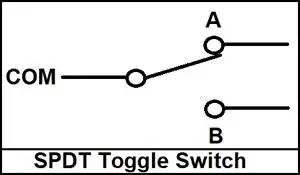
As a SPDT 1P2T slide switch PCB mount device, the SS-12D18 has one common (COM) pin and two throw positions (T1 and T2). Sliding the actuator to one end connects COM to T1; sliding to the other connects COM to T2. This makes the SS-12D18 ideal for two-position selection functions: power source switching (battery vs USB), signal path routing (channel A vs channel B), mode selection (normal vs configuration), and any application requiring a latch-in toggle between two circuit states.
The SS-12D18 vertical slide switch is rated at 0.3A / DC 50V — appropriate for low-power signal and control switching applications typical of consumer electronics and embedded systems. The switch is not designed for mains power switching or high-current motor control; it is intended for logic-level, signal, and low-voltage DC circuit switching. The gold-plated copper alloy contacts provide stable, low-resistance switching throughout the rated 10,000 operating cycles.
According to the IEC 61058 standard for switches for appliances, slide switches are classified by their circuit function, current rating, and mounting method. The SS-12D18 falls within the signal-grade category, suitable for switching circuits up to 50V DC and 0.3A. This positions it for use in the vast majority of consumer electronics signal switching applications where low contact resistance and mechanical reliability over thousands of cycles are the primary requirements.
The through-hole (DIP) solder mounting provides strong mechanical anchoring to the PCB — the three pins pass through drilled holes and are wave-soldered or hand-soldered on the back side, providing significantly greater pull-out resistance and vibration resistance compared to SMT mounting. This is particularly important for a slide switch that experiences repeated manual actuation force during its operating life.
The miniature slide switch through-hole solder body is manufactured from high-temperature thermoplastic, compatible with wave soldering assembly. The actuator is available in standard knob height. For alternative slide switch configurations, see our miniature SPDT slide switch 3-pin, the full slide switch range, or compare with our complete electromechanical switch catalogue.
All SS-12D18 switches are manufactured in Vistar Electronics’ ISO 9001:2015 certified facility in Shenzhen, China, and comply with RoHS 3 (EU Directive 2015/863) and REACH SVHC regulations — ready for global export markets including Europe, North America, and Asia.
SPDT 1P2T Slide Switch PCB Mount — SS-12D18 Full Technical Specifications
| Parameter | Value | Notes |
|---|---|---|
| Part Number | SS-12D18 | Standard catalog item |
| Switch Type | Slide Switch | Manual linear actuator |
| Circuit Function | SPDT / 1P2T | Single Pole Double Throw |
| Number of Pins | 3 pins | 1× COM, 2× Throw |
| Mount Type | Through-Hole DIP | Vertical / upright orientation |
| Orientation | Vertical (upright) | Actuator faces upward |
| Current Rating | 0.3A | DC signal switching |
| Voltage Rating | DC 50V | Maximum |
| Operating Life | 10,000 cycles | Mechanical actuation cycles |
| Contact Material | Copper Alloy, Gold Plated | Low, stable contact resistance |
| Actuator Material | Thermoplastic | Standard knob height |
| Body Material | High-Temp Thermoplastic | Wave-solder compatible |
| Operating Temperature | −25°C to +70°C | Consumer & light-industrial |
| Storage Temperature | −40°C to +85°C | — |
| Packaging | Bag / Tray | Through-hole assembly |
| Compliance | RoHS 3, REACH SVHC | EU & global export ready |
| Certification | ISO 9001:2015 | Factory quality management |
Why Engineers Choose the SS-12D18 Miniature Slide Switch Through-Hole Solder Design
Vertical Orientation — Top-Access Actuator for Horizontal PCBs
The vertical mounting positions the slide actuator facing upward from the PCB surface, enabling top-panel user access in products where the PCB is mounted horizontally inside the chassis. The actuator is accessible through a slot in the product housing without requiring side-panel access, simplifying mechanical design for portable and desktop electronics.
SPDT 1P2T — Versatile Two-Position Circuit Selection
Single Pole Double Throw (1P2T) circuit function connects the common pin to one of two throw contacts depending on actuator position. This enables power source selection (battery vs USB), signal path routing (channel A vs B), mode selection (normal vs setup), and input multiplexing — covering the most common two-position switching requirements in consumer and embedded electronics.
Through-Hole DIP — Maximum Mechanical Stability Under Repeated Actuation
Three through-hole pins are wave or hand-soldered through the PCB, anchoring the switch body from both sides of the board. This provides far greater resistance to actuator side-loads and pull-out forces compared to SMT mounting — critical for a slide switch that experiences repetitive manual force during its 10,000-cycle operating life.
10,000 Operating Cycles — Long Service Life for Consumer Applications
Rated for 10,000 mechanical actuation cycles, satisfying the durability requirements for consumer electronics used daily over a multi-year product lifespan. Gold-plated copper alloy contacts maintain stable, low contact resistance throughout the rated cycle life, ensuring consistent switching performance without intermittent contact failures.
Compact Miniature Body — Space-Efficient PCB Footprint
The SS-12D18 miniature body occupies a small PCB footprint, making it suitable for space-constrained designs including remote controls, wireless sensors, wearable devices, and compact embedded controller boards. The compact body allows the switch to be positioned close to other components without requiring large keep-out zones.
RoHS 3 & REACH Compliant — Global Export Ready
Fully compliant with RoHS 3 (EU Directive 2015/863) and REACH SVHC substance regulations. Compliance declarations available upon request for CE marking, supply chain qualification, and customer audit programs. Suitable for EU, North American, and all major regulated export markets.
Where to Use the Vertical Slide Switch 0.3A 50V DIP — SS-12D18 Application Guide
SS-12D18 3 Pin Vertical Slide Switch — Frequently Asked Questions
What does “1P2T” mean for a slide switch? How does it work?
1P2T stands for 1 Pole, 2 Throw — also called SPDT (Single Pole Double Throw). This means the switch has one common (COM) terminal and two output terminals (Throw 1 and Throw 2).
When the actuator slides to Position 1: COM connects to Throw 1 (T1), disconnecting T2. When the actuator slides to Position 2: COM connects to Throw 2 (T2), disconnecting T1. The switch always maintains one of the two connections — it is a latching switch that holds its position until physically moved. This makes 1P2T ideal for selecting between two signal paths, two power sources, or two operating modes. See the IEC 61058 standard for switch terminology and classification.
What is the difference between a vertical and horizontal slide switch?
The orientation refers to how the actuator is positioned relative to the PCB surface:
- Vertical slide switch (SS-12D18): the switch body stands upright on the PCB, with the actuator sliding parallel to the PCB surface but accessible from above the board. Best for top-panel access in horizontal PCB assemblies.
- Horizontal slide switch: the switch body lies flat on the PCB, with the actuator sliding along the board edge and accessible from the side. Best for side-panel access in vertical PCB assemblies or slim chassis designs.
For horizontal variants, see our horizontal slide switch range.
Can the SS-12D18 be used to switch mains (AC) voltage or motor power?
No. The SS-12D18 is rated at 0.3A / DC 50V maximum — it is a signal-grade switch designed for low-power DC circuit switching, logic-level signal routing, and control circuit applications. It must not be used for:
- Mains AC voltage switching (100V–240V AC)
- High-current power switching (motors, solenoids, heating elements)
- Any application exceeding 0.3A or 50V DC
For higher-power switching requirements, consult our sales team for alternative switch products with higher current and voltage ratings.
What assembly process is recommended for the SS-12D18?
The SS-12D18 uses through-hole DIP mounting and supports two assembly methods:
- Wave soldering: insert the three pins into the PCB holes, then pass through the wave solder machine. The high-temperature thermoplastic body is rated for wave soldering profiles.
- Hand soldering: solder each pin individually — suitable for prototyping, low-volume assembly, and rework.
Note: the SS-12D18 is supplied in bag or tray packaging and is not compatible with SMT pick-and-place reflow production lines. For SMT-compatible slide switches, please enquire with our sales team.
Is the SS-12D18 compatible with wave soldering?
Yes. The SS-12D18 body is manufactured from high-temperature thermoplastic that withstands standard wave soldering temperature profiles (peak approximately 260°C). The through-hole pins are tinned copper alloy, compatible with standard lead-free solder alloys (Sn-Ag-Cu, SAC305) and leaded solder (Sn63Pb37).
Recommendation: ensure the switch actuator is in the midway position (if possible) during wave soldering to minimise thermal stress on the actuator mechanism. After soldering, verify the actuator slides freely through both positions before board-level testing.
What is the MOQ and can I get a free sample?
Standard MOQ is 1,000 pieces with a 2–4 week production lead time. Free samples are available for qualified engineering and product development projects. Contact sales@vistarelectronics.com with your company details, project application, and part number (SS-12D18), or click the “Get a Quote” button at the top of this page.

3 pins slide switch 1p2t

1p3t slide knob swi1P3T Slide Knob Switch Vertical — SS-13D01 3 Pin Vertical PCB Slide Switch with 1P2T Function tch vertical

panel Mount Miniature slide switch dpdt 6pin

2P4T Vertical slide switch 10 pin DIP Through Hole

wire solder slide switch vertical 1p2t

Vertical Slide Switch DIP 8 Pin — SS-23L10 Through-Hole 8-Pin Vertical Slide Switch for Audio, Instrumentation & Industrial Controls

DIP Slide Switch 2P6T — SS-26D01 Through-Hole 2-Pole 6-Throw Slide Switch for PCB, Audio & Industrial Controls

3Pin slide switch 1p2t

Mini Slide Switches for Medical Devices: Selection Guide, Applications & Reliability
Selecting mini slide switches for medical devices? Get guidance on electrical ratings, sterilization, SMT vs through-hole, and reliability. Ensure patient safety. When...

Mini Slide Switch Reliability: 8 Factors That Affect Long-Term Performance
What really determines mini slide switch reliability? Explore 8 factors from contact material to PCB mounting that impact lifespan. Improve durability in...
SPDT Slide Switch: A Classic Solution for Precision Control and Circuit Routing
In the control and signal path selection of electronic systems, slide switches have always held an indispensable position due to their intuitive...