

1p3t slide knob swi1P3T Slide Knob Switch Vertical — SS-13D01 3 Pin Vertical PCB Slide Switch with 1P2T Function tch vertical
1P3T Slide Knob Switch Vertical — SS-13D01 Product Overview
The SS-13D01 is a high-reliability 1P3T slide knob switch vertical engineered for applications requiring a low-profile, user-actuated control mechanism. Unlike horizontal slide switches that extend outward from the panel, this vertical slide knob switch orients the actuator perpendicular to the PCB, allowing for intuitive top-panel operation while minimizing the footprint on the circuit board itself.
As a 3 pin PCB slide switch, the SS-13D01 is specifically designed for through-hole (plug-in) soldering. This manufacturing method ensures maximum durability and resistance to mechanical shock, making it the preferred choice for ruggedized equipment and high-end audio gear where connector stability is paramount. With its 1P2T (Single Pole Double Throw) configuration, this switch provides versatile circuit routing capabilities, allowing engineers to select between two distinct electrical paths using a single control input.
SS-13D01 Slide Switch — Full Technical Specifications
| Parameter | Value | Notes |
|---|---|---|
| Part Number | SS-13D01 | Vertical Knob Style |
| Switch Type | Slide Knob Switch | Electromechanical Actuator |
| Configuration | 1P3T / 1P2T | Single Pole, Double/Three Throw |
| Pin Count | 3 Pins | Standard termination |
| Mounting Type | PCB Through-Hole (T/H) | Plug-in solder termination |
| Orientation | Vertical | Actuator perpendicular to PCB |
| Electrical Rating | 0.3A, DC 50V | Resistive Load |
| Operating Life | 10,000 Cycles | Minimum durability |
| Contact Material | Copper Alloy | High conductivity |
| Termination Plating | Tin Plated | Solderability & corrosion resistance |
| Actuator Material | Thermoplastic | High strength & heat resistance |
| Operating Temperature | -25°C to +85°C | Commercial & light-industrial |
| Storage Temperature | -40°C to +85°C | — |
| Compliance | RoHS | Lead-free compatible |
Why Engineers Prefer the SS-13D01 3 Pin PCB Slide Switch for Robust Control
Compact Vertical Profile
The vertical slide knob switch design minimizes the “footprint” on the PCB while providing a comfortable grip height for the user. This is ideal for densely populated boards or enclosures with limited internal height.
Robust Through-Hole Mounting
Unlike surface-mount devices, the through-hole pins of this 3 pin PCB slide switch provide superior mechanical anchoring. This prevents the switch from being ripped off the board during forceful actuation or if the knob is used as a leverage point.
1P2T / 1P3T Circuit Flexibility
Functioning as a 1P2T slide switch, it allows for the selection of two different circuit paths (e.g., ON-ON or ON-OFF-ON configurations). This versatility makes it suitable for power routing, signal selection, or mode switching in electronic devices.
10,000 Cycle Durability
Rated for 10,000 operating cycles, the SS-13D01 is built to withstand the rigors of daily use in both consumer and light-industrial environments, ensuring long-term reliability.
Target Applications: Where to Use the SS-13D01 Vertical Slide Knob Switch
SS-13D01 1P3T Slide Knob Switch — Frequently Asked Questions
What is the difference between 1P3T and 1P2T on the SS-13D01?
While the product series is designated as 1P3T (Single Pole Triple Throw), the specific SS-13D01 variant functions as a 1P2T slide switch (Single Pole Double Throw). This means it has three physical pins (Common, Normally Open, Normally Closed) and controls two circuit paths. The “3T” nomenclature often refers to the internal mechanism or the physical pin count, whereas “1P2T” describes the electrical function (two throw positions).
Is this switch suitable for high-current applications?
No. The 1P3T slide knob switch vertical is rated for 0.3A at DC 50V. It is designed for signal switching or low-power control circuits. For high-current loads (such as motors or high-wattage lights), you should use this switch to control a relay or transistor, not the load directly.
What is the advantage of a vertical orientation versus a horizontal slide switch?
A vertical slide knob switch is optimal when you need to conserve space on the PCB (X/Y axis) but have room for height (Z-axis) in the enclosure. It allows the switch body to sit flat against the board while the knob protrudes through the top panel. This is often easier to assemble than right-angle horizontal switches and provides a more natural “up/down” actuation feel for the end user.
For comparison, see our range of horizontal slide switches.
Can I get a free sample of the SS-13D01?
Yes, free samples of the SS-13D01 are available for qualified engineering and product development projects. Please contact sales@vistarelectronics.com with your company details and project application, or click the “Get a Quote” button at the top of this page.
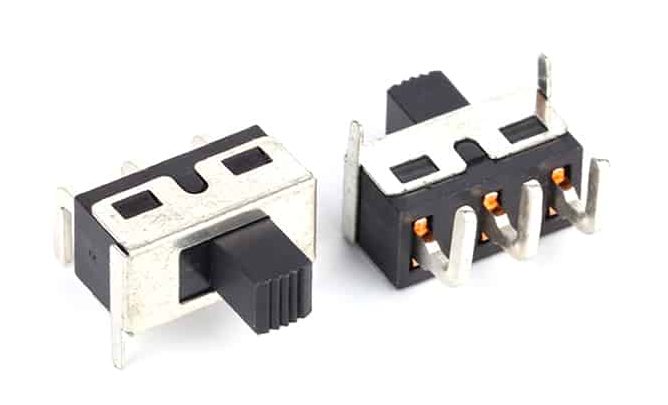
Miniature Slide Switch – 3-Pin SPDT PCB Switch

3 pins slide switch 1p2t

SPDT slide switch vertical 3p dip on/off right angle

panel Mount Miniature slide switch dpdt 6pin

Small Slide Switch DPDT 8-Pin for Compact Vertical PCB Designs

vertical slide switch 4 position

3 Pin SPDT Slide Switch for PCB Applications

3 Pin Vertical Slide Switch for DIP PCB Mounting
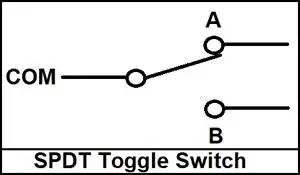
SPDT Slide Switch: A Classic Solution for Precision Control and Circuit Routing
In the control and signal path selection of electronic systems, slide switches have always held an indispensable position due to their intuitive...

Mini Slide Switch Reliability: 8 Factors That Affect Long-Term Performance
What really determines mini slide switch reliability? Explore 8 factors from contact material to PCB mounting that impact lifespan. Improve durability in...

Mini Slide Switch: The Complete Guide to Types, Applications & Selection
Explore the complete mini slide switch guide covering types, specifications, applications, and selection tips. Learn how engineers choose reliable slide switches. A...