

0.5mm Pitch FFC FPC Connector SMT Vertical for Compact PCB Designs
The FPC-0545DVP-nP is a DisplayPort connector female DIP right angle 20 pin — a full-size DP female receptacle with through-hole PCB mounting and right-angle (side-exit) orientation. Rated 0.5A, 35N max insertion force, 5,000 mating cycles. Supports DisplayPort 1.2/1.4. RoHS 3 & REACH compliant. Reel/Tray packaging. MOQ 1,000 pcs. Free sample available.
0.5mm Pitch FFC FPC Connector SMT Vertical for Compact PCB Designs
Engineers designing space-constrained PCBs increasingly turn to the 0.5mm pitch FFC FPC connector SMT vertical for its exceptional density and reliability. Whether you are working on an industrial display, a medical monitor, or a next-generation wearable device, choosing the right vertical FPC connector 0.5mm can make or break your design. This guide covers everything from technical specifications and selection criteria to common PCB design mistakes — helping you make an informed decision for your next project.
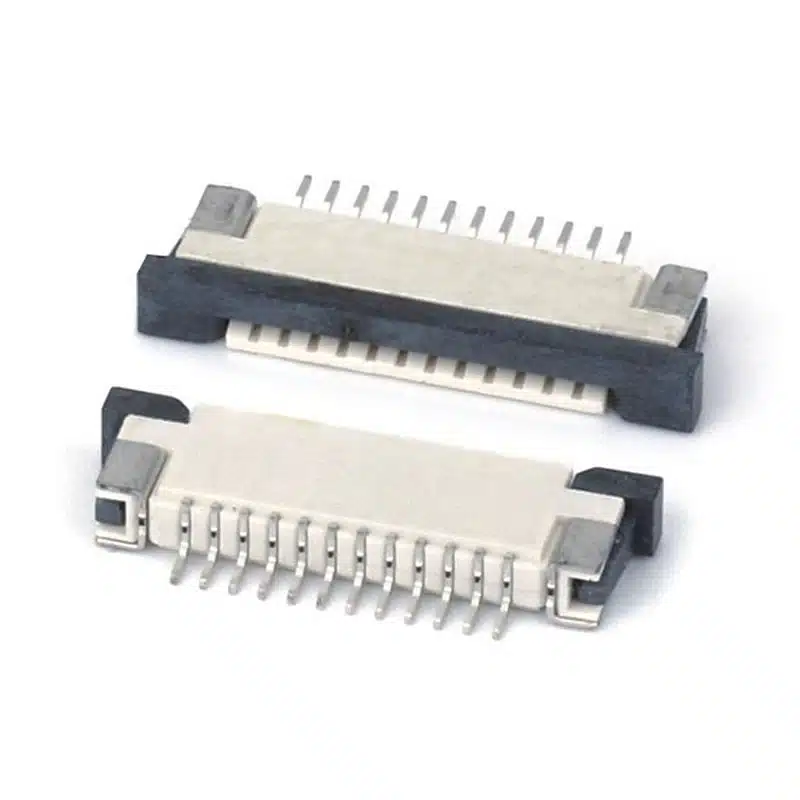
Vistar Electronics offers the FPC-0545DVP-nP, a premium SMT FFC connector designed for automated assembly and long-term reliability. With a 4.5mm height, 0.5A current rating, and 50V DC/AC, this 0.5mm ZIF connector is built for demanding applications across consumer, industrial, and medical electronics.[reference:0]
What Is a 0.5mm Pitch FFC FPC Connector SMT Vertical?
A 0.5mm pitch FFC FPC connector SMT vertical is a surface-mount connector that allows a flexible flat cable (FFC) or flexible printed circuit (FPC) to be inserted perpendicular to the PCB surface. The “0.5mm pitch” refers to the center-to-center distance between adjacent contacts — a fine pitch that enables high-density interconnections in compact electronic devices.
These connectors are typically ZIF (Zero Insertion Force) types, meaning the cable is inserted with no resistance, then secured by closing an actuator (flip-lock or slide-lock). The SMT (Surface Mount Technology) package supports automated pick-and-place assembly, making them ideal for high-volume production.[reference:1]
The vertical orientation is particularly valuable when PCB real estate is at a premium. Unlike right-angle connectors that require the cable to run parallel to the board, vertical connectors allow the cable to exit perpendicularly, saving valuable board space and enabling thinner device profiles.
Product Highlight: FPC-0545DVP-nP
Vistar’s FPC-0545DVP-nP is a 0.5mm pitch, vertical SMT ZIF connector with positive feet and a 4.5mm height. Key specifications include:
- Pitch: 0.5mm
- Mounting Type: SMT, Vertical
- Height: 4.5mm
- Current Rating: 0.5A
- Voltage Rating: 50V DC/AC[reference:2]
SMT FFC Connector Technical Specifications
Understanding the technical specifications of your SMT FFC connector is essential for ensuring compatibility and reliability. Below is a detailed specification table for the FPC-0545DVP-nP and comparable 0.5mm pitch vertical SMT connectors.
| Parameter | Value | Notes |
|---|---|---|
| Part Number | FPC-0545DVP-nP | n = 4, 6, 8, 10, 12, 14, 16, 18, 20 (specify when ordering) |
| Pitch | 0.5mm | 0.5mm |
| Mounting Type | SMT, Vertical | SMT, Vertical |
| Height Above Board | 4.5mm | 4.1–5.8mm[reference:6][reference:7] |
| Current Rating | 0.5A | 0.5A[reference:8] |
| Voltage Rating | 50V DC/AC | 50V DC/AC[reference:9] |
| Contact Type | Single-side Contact | Single-side / Dual-contact[reference:10] |
| Actuator Type | ZIF Flip Lock | Flip Lock / Slide Lock[reference:11] |
| Operating Temperature | –25°C to +85°C | –20°C to +85°C[reference:12] |
| Mating Life | 30 cycles (min) | 30 cycles (typical) |
| FPC/FFC Thickness | 0.3mm ±0.05mm | 0.3mm ±0.05mm |
For complete electrical and mechanical specifications, refer to the FPC-0545DVP-nP datasheet available from Vistar Electronics.
Vertical FPC Connector 0.5mm Advantages
1. Space Efficiency
The vertical orientation minimizes the connector’s footprint on the PCB. The cable exits perpendicular to the board, which is ideal for slim devices where thickness is a critical constraint — such as smartphones, tablets, and wearables.
2. High-Density Interconnection
With a 0.5mm pitch, these connectors pack more contacts into a smaller area compared to 1.0mm or larger pitch connectors. This enables complex signal routing in compact designs.
3. ZIF Mechanism for Reliability
The Zero Insertion Force design eliminates stress on the cable during insertion, while the locking actuator ensures a secure connection that withstands vibration and shock.[reference:3]
4. SMT Compatibility
Surface-mount packaging supports automated assembly processes, reducing manufacturing costs and improving consistency.[reference:4]
5. Design Flexibility
Available in top-contact and bottom-contact configurations, vertical FPC connectors offer flexibility for different PCB layout requirements.[reference:5]
Why Engineers Choose This Connector
Proven Reliability
ZIF connectors with positive locking mechanisms ensure stable connections in vibration-prone environments.[reference:21]
Space-Saving Design
The vertical orientation and 0.5mm pitch enable ultra-compact PCB layouts.
Automated Assembly Ready
SMT packaging supports high-volume pick-and-place manufacturing.
Wide Availability
Standardized 0.5mm pitch connectors are available from multiple suppliers, ensuring supply chain flexibility.[reference:22]
Design Flexibility
Options for top/bottom contact, flip/slide lock, and custom pin counts accommodate diverse application needs.
How to Choose the Right 0.5mm ZIF Connector
Selecting the correct 0.5mm ZIF connector for your application requires careful consideration of several factors. Here’s what every engineer should evaluate:
Contact Type: Top Contact vs Bottom Contact
Top-contact connectors have contact fingers on the top side of the FPC, while bottom-contact connectors have them on the bottom side. The choice depends on your PCB layout and the FPC design. Some connectors offer both top and bottom contacts for maximum design flexibility.[reference:13]
Lock Type: Flip Lock vs Slide Lock
Flip-lock actuators (like those on the FPC-0545DVP-nP) rotate to secure the cable. Slide-lock actuators slide horizontally. Flip locks are more common in vertical connectors and provide a tactile click for confirmation.[reference:14]
Vertical vs Right Angle
Vertical connectors allow the cable to exit perpendicular to the PCB — ideal for slim devices. Right-angle connectors route the cable parallel to the board, suitable for applications where height is less constrained.[reference:15]
Cable Thickness
Most 0.5mm pitch connectors support FPC/FFC thicknesses of 0.3mm ±0.05mm. Always verify compatibility with your cable specification.
Operating Force
ZIF connectors require minimal insertion force, but the actuator locking force varies by design. Consider the operating environment — applications subject to vibration may benefit from higher retention force.[reference:16]
Number of Positions
Pin counts typically range from 4 to 80+ positions. The FPC-0545DVP-nP series supports custom pin counts to match your specific requirements.
SMT Assembly Considerations
Ensure the connector’s solder pad layout and thermal profile are compatible with your PCB assembly process. Many 0.5mm pitch connectors feature staggered pins to prevent solder bridging.[reference:17]
Typical Applications
In each of these applications, the vertical FPC connector 0.5mm provides the density and reliability needed for high-performance operation in challenging environments.
Common PCB Design Mistakes
Even experienced engineers can make mistakes when designing with 0.5mm pitch FPC connectors. Avoid these common pitfalls:
❌ Wrong Cable Thickness
Using an FPC/FFC that is too thick or too thin can damage the connector or result in poor contact. Always verify that your cable thickness matches the connector specification (typically 0.3mm ±0.05mm for 0.5mm pitch connectors).
❌ Incorrect Insertion Direction
Inserting the cable upside down or at an angle can bend contacts or damage the actuator. Most connectors have a chamfered entry to guide insertion — follow the manufacturer’s recommended insertion procedure.[reference:18]
❌ Excessive Solder Paste
Too much solder paste can cause bridging between fine-pitch pads. Use stencil design guidelines specific to 0.5mm pitch components — typically, pad length should be about 1.5× the pitch (0.75mm for 0.5mm pitch) with appropriate solder mask openings.[reference:19]
❌ No Keep-Out Area
Failing to provide adequate clearance around the connector can interfere with the actuator mechanism or cable routing. Always consult the manufacturer’s recommended PCB layout for keep-out dimensions.
❌ Lock Damaged During Assembly
The ZIF actuator is delicate. During manual assembly or rework, excessive force can break the locking mechanism. Use proper tools and follow the recommended actuation procedure.
❌ Ignoring Impedance Control
For high-speed signals (e.g., LVDS, USB), the FPC must be impedance-controlled. Many 0.5mm pitch connectors are designed to support differential impedance of 100Ω ±7%.[reference:20]
Frequently Asked Questions (FAQ)
Is this a ZIF connector?
Yes, the FPC-0545DVP-nP is a ZIF (Zero Insertion Force) connector. The actuator mechanism allows the FFC/FPC cable to be inserted with zero force, then locked securely for reliable electrical contact.
What cable thickness is supported?
This 0.5mm pitch vertical SMT connector supports FPC/FFC cable thicknesses of 0.3mm ±0.05mm, which is the industry standard for 0.5mm pitch connectors.
Can it be used for LVDS signals?
Yes, 0.5mm pitch FFC FPC connectors are commonly used for LVDS (Low-Voltage Differential Signaling) interfaces in display applications, provided the cable is impedance-controlled.
What’s the mating life?
The FPC-0545DVP-nP offers a mating life of 30 cycles minimum, which is standard for ZIF FPC connectors in this category.
Can I customize the pin count?
Yes, Vistar Electronics offers custom pin counts for the FPC-0545DVP-nP series. Contact our engineering team with your specific requirements.
What is the difference between top contact and bottom contact?
Top-contact connectors have contact fingers on the top side of the FPC, while bottom-contact connectors have them on the bottom side. The FPC-0545DVP-nP is configured for specific contact orientation — please check the datasheet for your application.
Vertical vs right angle: which should I choose?
Vertical connectors (like the FPC-0545DVP-nP) allow the FPC to enter perpendicular to the PCB, saving board space. Right-angle connectors are used when the cable needs to run parallel to the PCB surface. Choose based on your mechanical layout constraints.
What is the MOQ for this connector?
MOQ varies by pin count and quantity. Please contact Vistar Electronics sales team for current MOQ and pricing information.
Related Resources
Explore more FPC connector solutions from Vistar Electronics:
Industry reference resources:
Ready to integrate the 0.5mm pitch FFC FPC connector SMT vertical into your next design? Contact Vistar Electronics today for samples, technical support, or custom pin-count configurations.

0.5mm FPC connector types Drawer SMD horizontal h=1.2 mm

FPC connector pitch 0.5mm rear lock

0.5mm FPC FFC ZIF Connector – Dual-Contact, Right-Angle SMT for Space‑Saving PCB Layouts

Easy-on 0.5 mm FPC Connector Zif 2.0H smt Right Angle

0.5mm pitch zif connector fpc Top contact
1.0mm Pitch FPC Connector zif top contact SMT horizontal

Easy-on zif Fpc connector 1.0 mm lower contact

Through-Hole 1.0mm Pitch FFC/FPC Female Connector for PCB, Ribbon Cable & Industrial Control

FPC Connector Types Explained: Complete Guide to Pitch, Contact, Mounting & Locking Styles
Complete guide to FPC connector types—pitch options, top vs bottom contact, ZIF vs non-ZIF, mounting styles, and locking mechanisms. Learn how to...
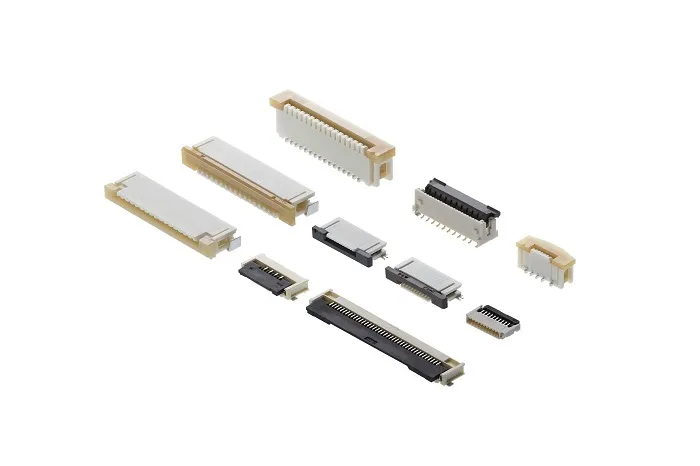
FPC Connector Pitch Selection Guide
Learn how to select the right FPC connector pitch—0.3mm, 0.5mm, or 1.0mm. Compare density, mechanical strength, applications, and key selection factors for...

FFC Connectors vs. FPC Connectors: 4 Crucial Differences You Need to Know!
A design team once spent three weeks debugging an intermittent display flicker on a new portable medical device. The root cause wasn’t...