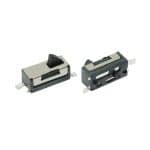
Detector Switch vs Micro Switch: What’s the Difference?
When a product fails in the field, engineers often investigate firmware bugs, PCB defects, or component quality issues. Surprisingly, many failures originate from a much simpler source: selecting the wrong sensing switch.
A common example occurs in consumer electronics and industrial equipment where designers use a micro switch when a detector switch would have been more suitable—or vice versa. The result can be premature wear, false triggering, excessive operating force, assembly challenges, and unnecessary manufacturing costs.
Understanding the differences between a detector switch and a micro switch is essential for product designers, sourcing managers, and OEM manufacturers. Although both devices perform mechanical detection functions, they are engineered for very different operating environments and performance requirements.
This guide provides a practical engineering comparison, explains how each technology works, highlights common selection mistakes, and offers procurement recommendations based on real-world applications.
For readers unfamiliar with detector switches, our internal guide on detector switch technology can provide additional background:
Detector Switch Product Series
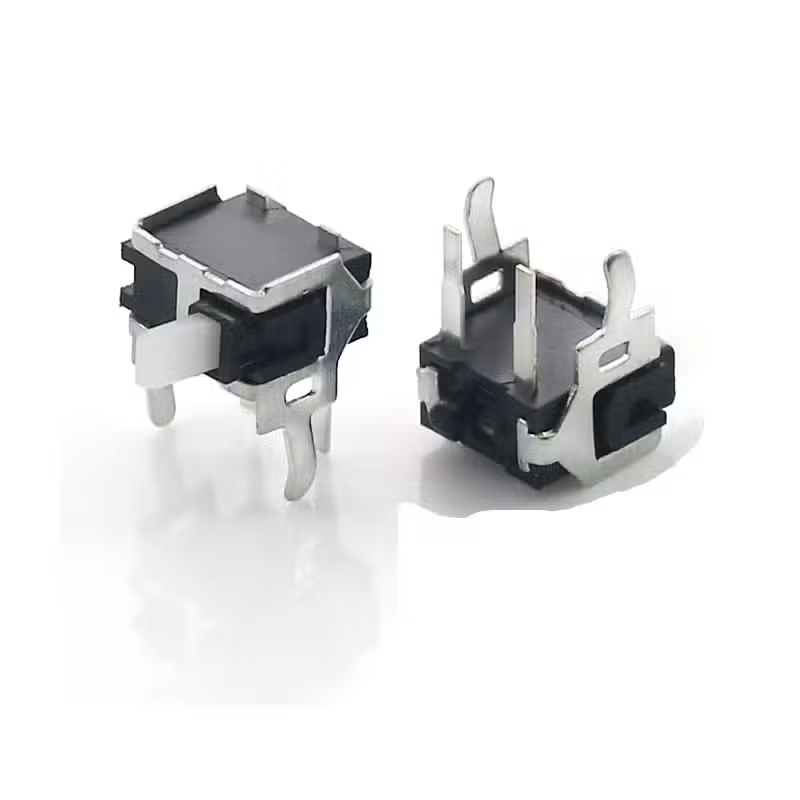
What Is a Detector Switch?
A detector switch is a compact electromechanical component designed to detect the presence, position, insertion, removal, opening, or closing of an object.
Unlike user-operated switches, detector switches are typically activated automatically by mechanical movement within a device.
Common examples include:
- Laptop lid detection
- SIM card presence sensing
- Battery insertion detection
- Printer paper detection
- Smart appliance cover detection
- Docking station recognition
The primary purpose is to provide low-current logic signals to a microcontroller or electronic control system.
Detector Switch Working Principle
The detector switch working principle is relatively simple.
When an object moves into a designated position, it actuates a small lever, slider, or push mechanism. This movement changes the state of internal contacts, generating an electrical signal that can be read by the system controller.
Most detector switches are designed for:
- Signal-level switching
- Low operating force
- Compact PCB layouts
- High-volume electronic products
What Is a Micro Switch?
A micro switch, often called a snap-action switch, is a mechanically actuated switch that uses a spring-loaded mechanism to rapidly change contact states.
The defining characteristic of a micro switch is its snap-action design.
Even a small actuator movement produces a rapid switching action, resulting in:
- Fast contact transfer
- High repeatability
- Strong tactile response
- Reliable electrical performance
Micro switches have been widely used for decades in industrial equipment, appliances, vending machines, automotive systems, and safety devices.
Detector Switch vs Micro Switch: Core Structural Differences

Although both technologies perform detection functions, their internal construction differs significantly.
Detector Switch Structure
A detector switch generally consists of:
- Plastic housing
- Metal actuator
- Spring contact system
- Fixed contact terminals
- SMT or through-hole terminals
The structure prioritizes:
- Miniaturization
- PCB integration
- Low profile design
Typical heights range from 1.5 mm to 6 mm.
Micro Switch Structure
A micro switch typically contains:
- Snap-action spring
- Mechanical lever
- Contact chamber
- Larger housing
- Higher-force actuator mechanism
The design emphasizes:
- Mechanical durability
- Contact stability
- Higher switching loads
Typical dimensions are significantly larger than detector switches.
7 Critical Differences Between Detector Switch and Micro Switch
1. Physical Size
Size is often the first deciding factor.
Detector Switch
Advantages:
- Ultra-compact footprint
- Low-profile designs
- Suitable for dense PCB layouts
Common applications:
- Smartphones
- Tablets
- Laptops
- Wearables
Micro Switch
Advantages:
- Robust structure
- Better for exposed installations
Common applications:
- Industrial machines
- Home appliances
- Vending equipment
Winner: Detector Switch for compact electronics.
2. Operating Force
Actuation force directly affects user experience and mechanical wear.
Detector Switch
Typical force range:
- 20 gf to 120 gf
Advantages:
- Gentle activation
- Minimal structural stress
Micro Switch
Typical force range:
- 50 gf to 500 gf or higher
Advantages:
- Clear mechanical feedback
- Better resistance to accidental activation
Winner: Depends on application requirements.
3. Electrical Load Capacity
This is one of the most important distinctions.
Detector Switch
Typical ratings:
- 1V–12V DC
- Signal-level current
- 10 mA–100 mA
Applications:
- Presence sensing
- Logic input circuits
Micro Switch
Typical ratings:
- 125VAC
- 250VAC
- Several amperes of switching current
Applications:
- Power control
- Motor systems
- Appliance switching
Winner: Micro Switch.
4. Mechanical Life
Mechanical durability varies significantly depending on design.
Detector Switch
Typical life:
- 50,000 to 500,000 cycles
Micro Switch
Typical life:
- 500,000 to 10 million cycles
Industrial-grade micro switches often exceed one million operations.
Winner: Micro Switch.
5. PCB Integration
Modern electronics demand efficient assembly.
Detector Switch
Most designs support:
- Surface-mount technology (SMT)
- Automated assembly
- Reflow soldering
This significantly reduces manufacturing cost.
Micro Switch
Many models use:
- Panel mounting
- Through-hole installation
- Mechanical fastening
Assembly is often more labor-intensive.
Winner: Detector Switch.
6. Environmental Resistance
Environmental conditions influence reliability.
Detector Switch
Best suited for:
- Controlled environments
- Consumer electronics
- Office equipment
Micro Switch
Many models offer:
- IP-rated sealing
- Dust protection
- Water resistance
- Vibration resistance
Winner: Micro Switch.
7. Cost Structure
Cost analysis should consider both component and assembly costs.
Detector Switch
Advantages:
- Lower unit cost
- Automated assembly
- Reduced PCB space
Micro Switch
Advantages:
- Longer operational life
- Greater load capacity
However, installation costs are often higher.
Winner: Depends on production volume and system requirements.
Technical Comparison Table
| Feature | Detector Switch | Micro Switch |
|---|---|---|
| Typical Application | Position Detection | Power Switching |
| PCB Integration | Excellent | Moderate |
| Operating Force | Low | Medium to High |
| Electrical Capacity | Signal Level | High Load |
| Product Size | Very Small | Larger |
| Mechanical Life | Medium | High |
| SMT Compatible | Yes | Limited |
| Industrial Use | Moderate | Excellent |
| Consumer Electronics | Excellent | Limited |
| Cost Efficiency | High | Medium |
Common Engineering Mistakes
Mistake #1: Choosing Based Only on Size
Many engineers select detector switches solely because they save space.
However, if the application requires high-current switching, a detector switch may fail prematurely.
Always verify:
- Current rating
- Contact rating
- Switching frequency
before final selection.
Mistake #2: Over-Specifying with Micro Switches
Some products use micro switches simply because they are familiar.
This often creates problems:
- Increased BOM cost
- Larger enclosure requirements
- More complex assembly
For low-current detection tasks, detector switches are frequently the better solution.
Mistake #3: Ignoring Tolerance Stack-Up
Detector switches are sensitive to positioning accuracy.
Engineers should evaluate:
- Housing tolerances
- PCB tolerances
- Actuator travel
- Manufacturing variation
during prototype testing.
Mistake #4: Forgetting Environmental Conditions
Humidity, dust, and vibration can dramatically affect performance.
Useful engineering references can be found through:
IPC Standards
and
All About Circuits
which provide valuable information on electronic design reliability.
How to Choose the Right Switch
Choose a Detector Switch When:
Your design requires:
- Compact dimensions
- SMT assembly
- Presence detection
- Position sensing
- Low-current switching
Typical products:
- Smartphones
- Tablets
- Laptops
- Bluetooth devices
- Charging docks
For example, compact SMT solutions such as:
Mini Thru-Hole Detector Switch
are commonly used in portable electronics.
Choose a Micro Switch When:
Your design requires:
- High switching current
- Long mechanical life
- Harsh environment operation
- Strong mechanical feedback
Typical products:
- Industrial machinery
- Safety interlocks
- Home appliances
- Automotive equipment
Procurement Considerations for OEM Buyers
Beyond technical specifications, procurement teams should evaluate supplier capabilities.
Key factors include:
Manufacturing Consistency
Look for suppliers offering:
- Automated production
- Stable tooling
- Incoming material inspection
Compliance Requirements
Verify support for:
- RoHS
- REACH
- UL requirements when applicable
For regulatory information, engineers can reference:
UL Solutions
during product development.
Long-Term Availability
A switch redesign can be expensive.
Choose suppliers capable of:
- Long production cycles
- Stable supply chains
- Consistent quality control
Engineering Support
Reliable suppliers should provide:
- 3D models
- Datasheets
- Sample programs
- Application guidance
before production qualification.
Future Trends: Miniaturization vs Durability
The market is moving in two directions simultaneously.
Consumer electronics continue pushing detector switches toward:
- Smaller footprints
- Lower profiles
- Higher SMT compatibility
Industrial equipment continues demanding:
- Greater durability
- Enhanced sealing
- Higher electrical capacity
As products become smarter and more connected, both switch technologies will remain essential, each serving different engineering priorities.
Conclusion
The debate around detector switch vs micro switch is not about which technology is better. It is about selecting the right device for the intended application.
Detector switches excel in compact electronic products where low-current sensing, PCB integration, and space efficiency are critical. Micro switches dominate applications requiring higher electrical loads, stronger mechanical feedback, and extended service life.
For engineers and procurement professionals, understanding the operating environment, electrical requirements, mechanical constraints, and manufacturing strategy is the key to making the correct choice.
Companies developing consumer electronics, industrial controls, and smart devices often require both technologies across different product platforms. Working with an experienced component supplier such as Vistar Electronics can help simplify component selection, improve sourcing efficiency, and reduce design risk throughout the product development cycle.