Tactile Momentary Push Button Switches have become a key component in human-computer interaction design to enhance the user experience due to their clear haptic feedback and instantaneous on-off characteristics.
Whether it’s consumer electronics, automotive controls, or industrial equipment, these switches ensure that every push delivers a clear sense of acknowledgment through precise mechanical design and feedback mechanisms.
This article will provide an in-depth analysis of its working principle, design points, and selection strategies.
The core characteristics of the tactile momentary push button switch
1. Definition & Working
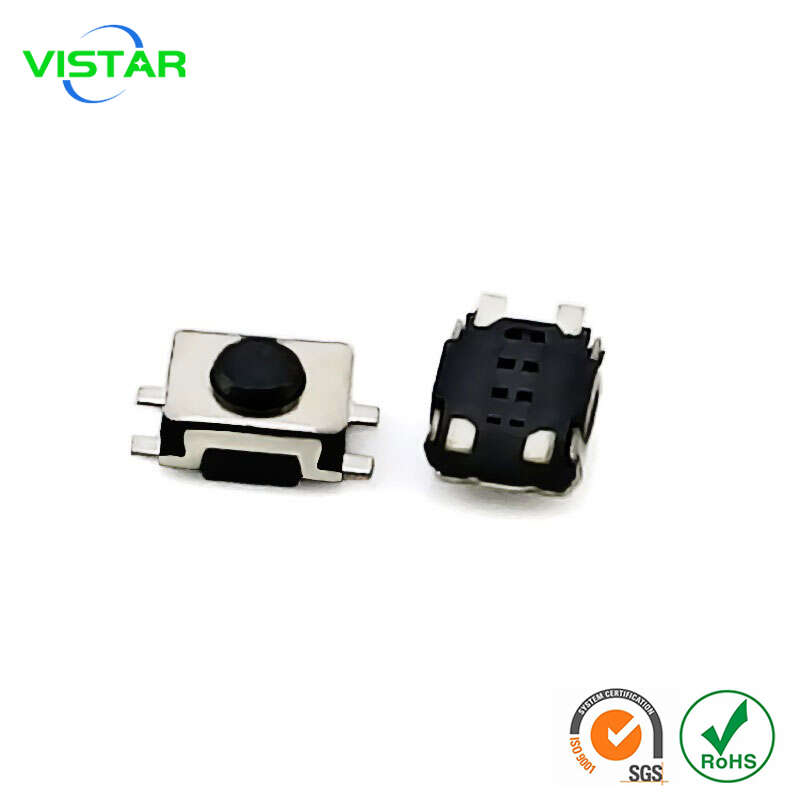
- Definition: A haptic momentary switch produces a distinct “click” tactile feedback through a mechanical structure (such as a metal shrapnel or dome contact) when pressed, while the circuit is instantaneously switched on and off.
- Feedback Mechanism:
- Metal Shrapnel (Dome Switch): Use the deformation of the shrapnel to produce a tactile feeling (common materials: stainless steel, beryllium copper).
- Tactile Rubber: Provides soft feedback (e.g. remote control buttons) through rubber bump compression.
2. Comparison with ordinary momentary switches
| FEATURES | Tactile switch | Ordinary momentary switch |
|---|---|---|
| Haptic feedback | A clear sense of “click” or paragraph | No feedback or weak feedback |
| Operational Accuracy | High (to avoid accidental touches) | Rely on user judgment |
| Typical Applications | Keyboards, gamepads, medical devices | Reset key, indicator switch |
The classification and design points of tactile switches
1. By Tactile Type
- Crisp: Strong “click” feedback (e.g. mechanical keyboard switches) for high-frequency operation scenarios.
- Soft: Smooth passage (e.g. TV remote control), suitable for low-noise scenarios.
- Adjustable: Supports haptic force customization through spring or structural design (e.g. gaming equipment).
2. Classification by structural design
- SMD:
- Features: Ultra-thin (≤2mm), high-density placement (such as mobile phone side buttons).
- Representative model: C&K TL3301 (0.6mm stroke, life 500,000 times).
- Through-Hole:
- Features: High vibration resistance, easy to solder by hand (e.g. industrial control panels).
- Representative model: Omron B3F-4000 (operating force 2.94N, IP40 protection).
- Waterproof Sealed Type:
- Feature: Silicone sealing ring + stainless steel shrapnel (IP67/IP68).
- Representative model: APEM 8000 series (chemical resistant, automotive grade standard).
3. Key Performance Parameters
| Parameters | Description | Typical |
|---|---|---|
| Actuation Force | The minimum force required to trigger the switch | 1.5N~3.5N(150g~350g) |
| Travel | Total compression distance (pre-stroke + trigger stroke) | 0.3mm~2.0mm |
| Tactile Ratio | The ratio of the peak force to the operating force (determines the feedback intensity) | 1.2~2.5 |
| Cycle Life | Mechanical durability (number of compressions) | 500,000~10,000,000 times |
Industry Application Scenarios and Innovation Cases
1. Consumer Electronics
–Apply:
- Keyboard & Input Device: Mechanical keyboard switches (such as the Cherry MX series) distinguish between dividend, brown and other types through tactile design.
- Wearables: The side buttons of smart watches (such as Apple Watch) use ultra-thin haptic switches (thickness ≤ 1mm).
–Case:
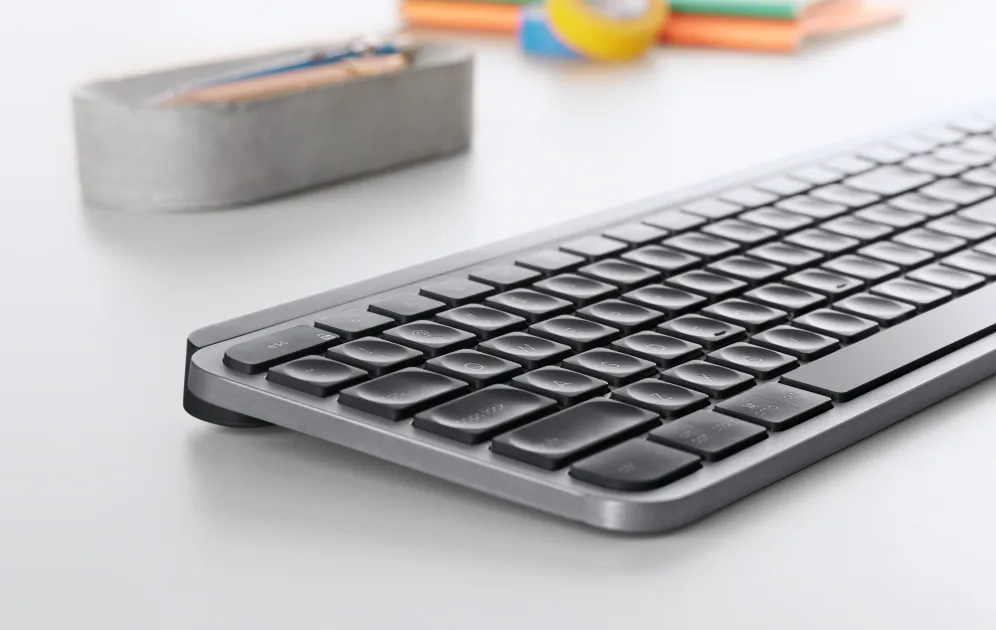
- Logitech MX Keys: Magnetic spring construction for precise 1.5mm actuation and low-noise feedback.
2. Automotive Electronics
–Apply:
- Multi-function buttons for the steering wheel, touch feedback on the center console, power window control.
–Request:
- Wide temperature range (-40°C~125°C), anti-electromagnetic interference (ISO 11452 standard).
–Case:
- Tesla Model Y Steering Wheel Wheel: Integrated tactile switch that supports dual operation of pressing and rolling.
3. Industrial & Medical Devices
–Apply:
- Instrument panel controls, surgical equipment buttons, and industrial emergency stop buttons.
–Request:
- Accidental contact resistance (high operating force required) and chemical resistance (alcohol/disinfectant wiping).
–Case:
- Siemens Medical CT Control Panel: IP69K protection level tactile switch, supports gloved operation.
Selection guide and common problem solving
1. Core dimensions of selection
- Environmental Adaptability: Temperature, Humidity, Ingress Protection (IPXX).
- Electrical Properties: Rated current/voltage (DC/AC), contact resistance (≤100mΩ).
- User experience: operating force, tactile clarity, noise level (≤20dB).
2. Hot Model Recommendation (2023)
| Model | Brand | FEATURES | Applicable Scenario |
|---|---|---|---|
| Cherry MX Brown | Cherry | Brown shaft, the sense of passage is soft | Mechanical keyboards, gaming equipment |
| Panasonic EVQPL | Panasonic | Ultra-thin (1mm), silent | Smartphones, tablets |
| C&K TL2215 | C&K | 5,000,000 cycles, IP67 | Industrial Control, Outdoor Equipment |
| ALPS SKHM | ALPS | Adjustable haptics, RGB backlight | Gamepad, car center control |
3. Common Problems & Solutions
| QUESTION | Reason | SOLUTION |
|---|---|---|
| Reduced or absent haptic feedback | Shrapnel fatigue or contamination | Replace the sealed switch and clean it regularly |
| Compression stuck | Structural design deviations or foreign body intrusion | Choose a dustproof and waterproof (IP65+) model |
| The contact resistance is unstable | Contact oxidation or plating wear | Available in gold-plated contacts or precious metal alloy |
Technology Trends and Future Directions
1. Intelligent Haptic Feedback:
- Piezo technology: Adjust the hardness of the touch by voltage (e.g. the Taptic Engine of the iPhone).
- Adaptive feedback: Dynamically adjusts haptics based on the use case (e.g., “vibration simulation” in games).
2. Green Manufacturing:
- Cadmium/halogen-free, RoHS 3.0 and REACH compliant.
- Recyclable structural design (e.g. modular shrapnel assembly).
3. Miniaturization and Integration:
- MEMS process for nanoscale tactile switches (thickness ≤ 0.5mm).
- Switch + sensor fusion (e.g. pressure sensing, temperature sensing)
Conclusion
The tactile push button switch realizes the “qualitative change” of user interaction in a very small space through accurate mechanical design and feedback adjustment.
When selecting a model, it is necessary to balance the three major elements of performance, environment and cost, and pay attention to the trend of intelligence and sustainability.
With the breakthrough of haptic simulation technology, the switch will no longer be a passive component in the future, but will become a “perceptual extension” of human-computer interaction.