
The following is a comprehensive introduction to SMD tactile switch, including their key specifications, types, application scenarios, and purchasing considerations.
What is an SMD Tactile Switch?
An SMD tactile switch (Surface Mount Device Tact Switch) is a miniature momentary switch directly soldered onto a printed circuit board (PCB) using surface mount technology (SMT).
Its characteristics include a short travel distance and distinct tactile feedback; when pressed, the user feels a clear “click,” and it automatically springs back to its initial position after being released. This type of switch typically uses a normally open (NO) single-pole single-throw (SPST) configuration.
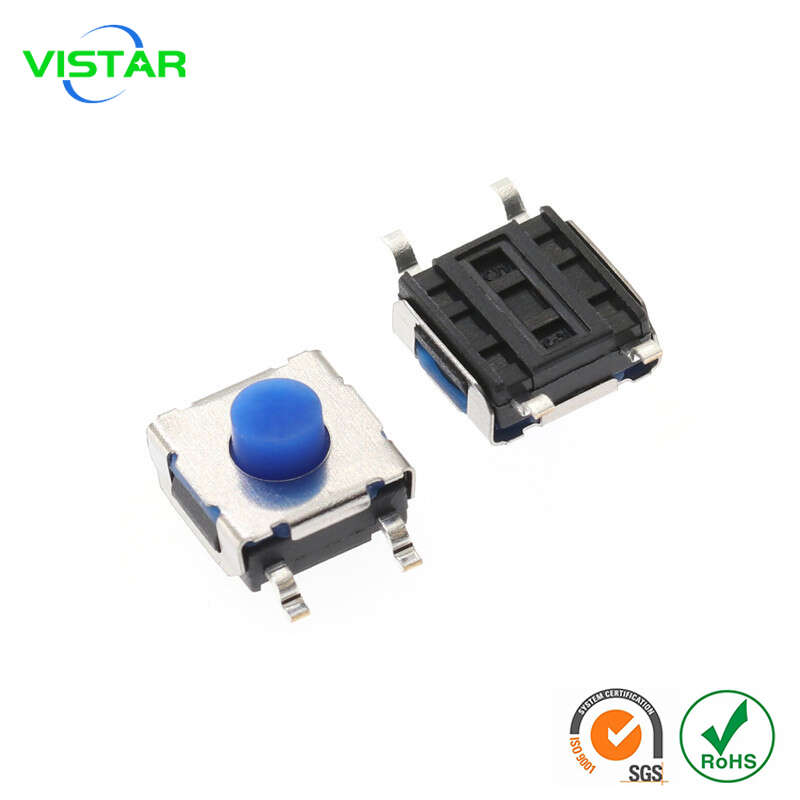
Key Technical Specifications
When selecting a tact switch smd, pay attention to the following core parameters, as they directly affect the switch’s performance and applicable scenarios:
| Specifications | Typical Range/Options | Description |
| Dimensions | 2.2×1.7mm to 12x12mm | Common sizes include 3x3mm, 4x4mm, 6x6mm, etc. Smaller sizes save space. |
| Operating Force | 70gf to 520gf | The force affects the pressing feel; light force is suitable for quick operation, while heavy force prevents accidental touches. |
| Travel | 0.20mm to 0.25mm | The distance the button can be pressed down. |
| Electrical Life | 50,000 to 1,000,000 cycles | The number of times the switch can operate normally under rated load. |
| Rated Load | Typically DC 12V 50mA | The voltage and current values the switch can safely withstand. |
| Protection Rating | IP67 etc | The protection rating indicates dust and water resistance, which is especially important for devices used in harsh environments. |
| Contact Resistance | ≤100mΩ | The smaller the value, the better the conductivity of the switch and the lower the power consumption. |
Common Types and Features
SMD haptic switches are available in various types depending on their design and function:
- Standard: The most common form, such as 6x6mm or 12x12mm, widely used in various consumer electronics products.
- Ultra-thin/Low-profile: Heights as low as 0.35mm or 0.55mm, ideal for ultra-thin devices with strict thickness limitations, such as smartphones and tablets.
- Sealed/Waterproof: With an IP67 (or higher) protection rating and a sealed structure, effectively preventing dust and liquid intrusion, suitable for outdoor equipment, medical devices, or industrial control panels.
- Illuminated: The switch integrates an LED for status indication, making the device clearly visible in the dark and enhancing its aesthetics.
- Multi-directional: For example, a 5-way navigation switch (five-way joystick) allows for five actions: up, down, left, right, and center. Commonly used in game controllers or multimedia controllers.
Application Scenarios and Selection Recommendations
Choosing the right SMD haptic switch requires considering the application area and usage requirements of the final product:

- Consumer Electronics: Such as TV remotes, Bluetooth headsets, power banks, etc. These applications typically prioritize small size and low cost. Standard switches with dimensions of 4x4mm or 3x3mm are recommended, with an operating force of around 160gf for comfortable operation.
- Industrial Control and Medical Equipment: Extremely high requirements for reliability and durability may necessitate switches with waterproof and dustproof capabilities. Choose models with a lifespan exceeding 200,000 cycles, an IP67 protection rating, and gold-plated contact materials to ensure stable performance in harsh environments.
- Automotive Electronics: Switches need to withstand wide temperature range variations and vibrations. Some series specifically designed for automobiles (such as the KSC series) offer greater environmental adaptability.
- Communication and IT Equipment: Such as servers, network switches, etc. Besides reliability, indicator lights are sometimes required to help maintenance personnel quickly identify equipment status.
Procurement and Quality Considerations
When purchasing SMD tactile switches, in addition to specifications, the following aspects should be considered:
- Certifications and Standards: Prioritize products that have passed ISO 9001 quality management system certification and comply with the RoHS directive (Restriction of Hazardous Substances). This is usually a basic guarantee of quality.
- Supplier Support: Many manufacturers offer customization services, such as specific operating force, color, height, or logo imprint. Samples can be requested for actual testing before bulk purchases.
- Packaging and Delivery: SMD components are typically packaged in reels and tape to accommodate automated placement machines. The minimum order quantity (MOQ) and delivery time must be clearly defined.
Hopefully, the above information helps you gain a comprehensive understanding of SMD tactile switches. If you can share the specific application scenario of the switch (e.g., in remote controls, industrial panels, or other equipment), I can provide you with more specific selection advice.


