
I/O Connectors
I/O connectors also called Input/Output connectors are essential components in electronic systems that allow communication and data transfer between devices or subsystems. They provide a means to connect and disconnect devices easily, enabling modular design and flexibility in system configuration.
I/O Connector Types
Here are some common types of IO connectors:
- USB-A: The most common type, found on computers and laptops.
- USB-B: Used for connecting printers, scanners, and other peripheral devices.
- USB-C: A newer, reversible connector that supports higher data rates and power delivery.
- Micro USB and Mini USB: Compact versions used in mobile devices and small electronics.


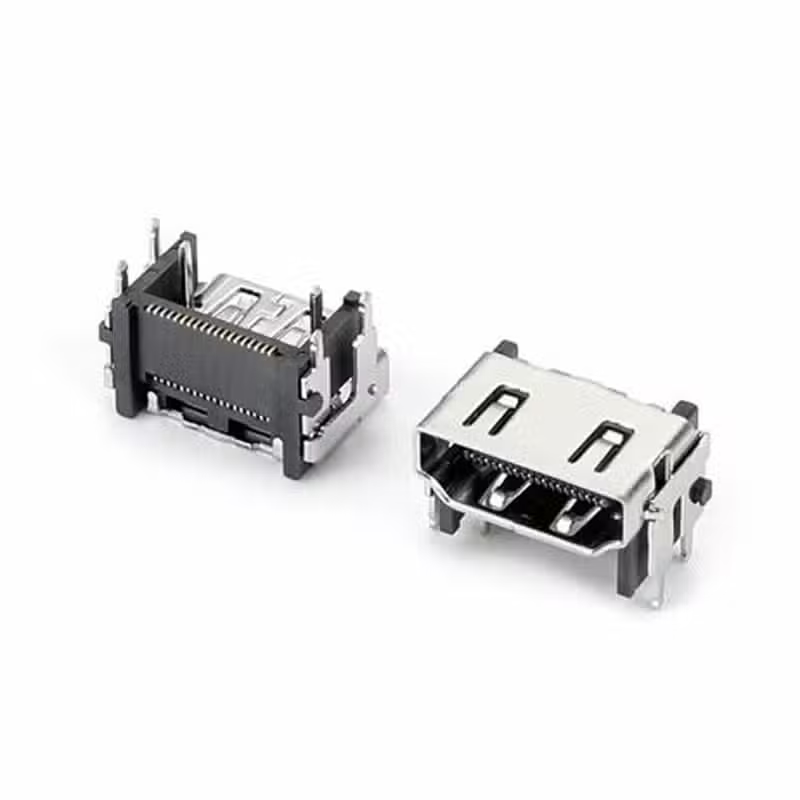
- Used for transmitting high-definition video and audio between devices, such as TVs, monitors, and gaming consoles.
- Supports various versions (1.4, 2.0, 2.1) with increasing bandwidth and features.


- A digital interface for connecting video sources to displays, commonly used in computer monitors.
- Supports high resolutions, refresh rates, and multiple displays through a single cable.


- RJ45 connector: Used for wired networking, connecting devices to local area networks (LANs) and the internet.
- Supports various speeds, such as 10/100 Mbps, 1 Gbps, and 10 Gbps.


- 3.5mm (1/8 inch) jack: Used for analog audio input and output, such as headphones and microphones.
- RCA: Analog connectors for audio and video, typically color-coded (red/white for audio, yellow for video).
- XLR: Professional-grade connectors for balanced audio signals, often used in music and audio production.


- DB9, DB15, DB25: Used for serial communication (RS-232), VGA video, and parallel printer interfaces.
- Commonly found in industrial and scientific equipment.


Key Features and Considerations
- Number of Pins/Contacts: Determines the number of signals or circuits that can be connected.
- Pin Configuration: The arrangement of pins within the connector.
- Contact Type: Various types of contacts (e.g., gold-plated, silver-plated) affect performance and durability.
- Current Rating: The maximum current the connector can handle safely.
- Voltage Rating: The maximum voltage the connector can handle safely.
- Environmental Resistance: Protection against moisture, dust, vibration, and temperature extremes.
- Durability: The ability to withstand repeated mating and unmating cycles.
- Signal Integrity: The ability to maintain signal quality during transmission.
IO connectors are essential for connecting devices and systems, enabling seamless data transfer, power supply, and communication. Understanding the types, features, and considerations for choosing the right connector is crucial for successful electronics development and assembly.