
International standards and certifications in the pin header industry are crucial for ensuring the quality, safety, and compatibility of connector products. The table below summarizes the main standards and certifications for your quick reference:
| Standard/Certification | Type Name/Organization | Main Focus/Application Areas |
| International Standards | IEC 60603, IEC 61076 | General specifications and performance requirements for connectors, widely used in electronic equipment and information communication technologies. |
| National Standards | MIL-STD (US Military Standard) | High reliability requirements, such as aerospace and defense, defines dimensions, spacing, and electrical characteristics. |
| DIN 41612 (German Industrial Standard) | Industrial automation and communication equipment, defines dimensions, pin arrangement, and electrical characteristics. | |
| Industry Standards | ANSI/TIA-568 | Commercial building structured cabling systems, involving fiber optic connections in network equipment and data communications. |
| JEDEC Standards | The semiconductor industry, defines plug and socket dimensions, pin layout, etc. | |
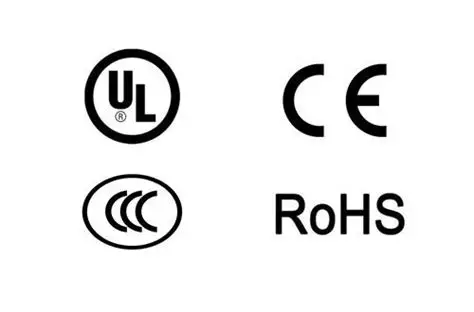
| Safety certifications | UL (USA) and CSA (Canada) | product safety performance, including current carrying capacity, insulation, and fire resistance; these are often necessary conditions for market access. |
| CE (Europe) | indicates that the product complies with EU safety, health, and environmental standards. | |
| Environmental certification | RoHS | restricts the use of certain hazardous substances in electrical and electronic products, complying with environmental regulations. |
How Companies Should Respond to Standards and Certifications
For pin header manufacturers, understanding and applying these standards and certifications is crucial.
- Standards Followed in the Design Phase: In the early stages of product design, appropriate standard systems should be selected as design guidelines based on the requirements of the target market and customers.
This includes determining the correct pin spacing (e.g., the common 2.54mm or 1.27mm), current and voltage capacities, material selection (e.g., phosphor bronze or brass), and the heat resistance rating of insulation materials. - Production and Quality Control: During the manufacturing process, a strict quality control system needs to be established to ensure that the product meets standard requirements in terms of appearance quality, dimensional accuracy, electrical performance (e.g., contact resistance, insulation resistance), and mechanical performance (e.g., insertion and extraction force, durability).
This typically involves numerous testing items, such as dimensional measurements, insertion and removal tests, and corrosion resistance tests. - Certification Process: To obtain certifications such as UL and CE, companies need to submit an application to a qualified certification body, providing product samples and detailed technical documentation. The certification body will conduct rigorous testing to ensure the product fully complies with standards before granting a certification certificate.
Choosing a third-party testing organization with CMA/CNAS accreditation, such as the Qingxi Technology Research Institute, for pre-testing and obtaining test reports can effectively improve efficiency and prepare for formal certification. - Targeting Different Markets: If the product is planned for sale in North America, UL certification should be the primary consideration; for entering the EU market, CE marking and RoHS compliance are basic requirements; while for specialized fields with extremely high reliability and environmental adaptability requirements, such as automotive electronics, the corresponding MIL or automotive electronics standards must be met.

How to Choose the Right Standards And Certifications in The Pin Header Industry
After understanding the above standards and certifications, choosing the appropriate solution in actual work is even more crucial.
- Define the Target Market and Industry: Different markets and industries have their own preferences and mandatory requirements. For example, consumer electronics products may focus more on IEC standards and CE/RoHS certifications; automotive electronics or industrial control fields may emphasize DIN standards; while aerospace or military projects must meet MIL standards.
Connectors in the medical device field have extremely high requirements for safety and reliability, requiring compliance with relevant standards and rigorous certification. - Consult suppliers or certification bodies: During the selection process, proactively consult pin header connector manufacturers or distributors, as they can usually provide information on the standards and certifications their products comply with. For complex and uncertain requirements, consulting professional certification bodies is a reliable approach.
- Pay attention to standard versions and updates: International standards and certification requirements are updated; ensure that you are using the latest, currently valid version.
Conclusion
Selecting appropriate international standards and certifications for the pin header industry is primarily about aligning with the product’s end application scenario, target market regulations, and specific customer requirements. Familiarity with these standards helps ensure product quality, safety, reliability, and smooth market access.
Hope this information helps you better grasp the compliance aspects of pin header connectors. If you can specify the target application area or market, I might be able to provide more detailed suggestions.


